Modern Coastal Living: Designing Durable and Aesthetic Window Solutions for Sydney and Melbourne
MC
Author
2026-09-23
Published
11 min read
Reading time
Nowhere in Australia is the tension between beauty and durability more visible than in Sydney and Melbourne. These two cities hold some of the country’s most valuable and most demanding residential real estate — harbour-side apartments, headland villas, and coastal townhouses — where floor-to-ceiling glazing is a signature of modern living. But the same sea that creates the view also creates the hazard: salt-laden air, relentless UV radiation, and wind loads that can drive rain horizontally into a building envelope. For homeowners, builders, and architects, the result is a genuinely difficult design problem: how do you specify a window system that is slim enough to frame the ocean, tough enough to survive it, and fully compliant with the standards that govern the Australian and New Zealand market? This guide to coastal home window design Sydney Melbourne professionals rely on breaks the problem down into environment, performance metrics, materials, product solutions, and compliance — so you can specify with confidence.
The short answer, before the detail: choose certified thermal-break aluminium systems tested to AS 4284 at or near the top of the performance scale, pair them with Low-E insulated glazing, and specify hardware engineered for ANZ coastal conditions. Meichen International Windows & Doors (MC Windows) has spent close to two decades building exactly this kind of platform, operates a 20,000 m² advanced manufacturing facility, and has served the Australian and New Zealand markets since 2017 with 43 certified product series for Australia alone [1]. What follows is the framework behind a durable, aesthetic coastal specification — with the numbers and the product examples to back it up.
The Coastal Environment: What Your Windows Actually Have to Survive
Every component of a coastal facade lives under stress that an inland component never sees. The three dominant attack vectors are salt, UV light, and wind, and a window system’s long-term performance is determined by how well it is engineered against all three simultaneously. A system that passes an indoor showroom test but has not been designed for coastal service will show its age in the first five to ten years: corroded hardware, swollen seals, discoloured finishes, and — worst case — water ingress on the first serious storm [2].
Salt Spray and Corrosion
Sodium chloride carried on sea breezes settles on every exposed surface, and its effect on metals is cumulative. Coatings matter: a high-quality powder-coat or PVDF finish on well-prepared aluminium will resist salt attack for decades, while a thinner or poorly adhered coating fails early. Hardware is the usual weak point — hinges, rollers, and locking points that were designed for an inland application are the first components to seize or pit. The correct response is not a cosmetic coating but a full material specification: marine-grade fasteners, appropriately specified stainless or coated hardware, and gasket systems that do not degrade in salt air.
UV Exposure and Thermal Cycling
Coastal Australian UV indices are among the highest on earth. UV energy degrades polymers (seals, gaskets, rubber weatherstripping), fades certain finishes, and cycles with temperature swings to work fatigue into every joint. A window that performs on day one can quietly lose air tightness over years as gaskets compress and coatings chalk. This is why a coastal specification should insist on tested, warrantied seal systems and UV-stable glazing — including Low-E coatings that remain stable over decades of service.
Wind and Storm Loading
Wind does not just blow — it presses, sucks, and slaps water onto the facade. The Australian wind loading standard, AS/NZS 1170.2, defines regional wind zones, and coastal and headland sites frequently sit in the higher categories [2]. Large glass areas behave like sails: the bigger the format, the higher the wind load, which is why high-rise developments and large-format coastal doors require structural glazing capacity in addition to weather performance. Sydney’s exposed headlands and Melbourne’s direct westerlies off Port Phillip Bay are classic examples of sites where wind loading, not aesthetics, should drive the engineering.
Coastal Home Window Design: A Sydney and Melbourne Specification Guide
Sydney and Melbourne are both coastal, but they are not the same brief. A specification that works on the NSW Central Coast does not automatically work on the Victorian bays, and a good coastal home window design for Sydney or Melbourne starts by understanding each city’s specific exposure.
Sydney: Harbour Headlands, High-Rise Towers, and Morning Sun
Sydney’s residential market splits into two exposure profiles. The first is the headland villa — Mosman, Vaucluse, Coogee, Manly, and the Northern Beaches — where salt air is at its most aggressive, elevations face the open ocean, and wind funneling around headland terrain produces gusts well above regional averages. The second is the high-rise: thousands of apartments within a few kilometres of the harbour, where wind tunnel effects between towers can amplify local wind pressures on upper floors [2]. For Sydney headlands, the priority is water tightness and corrosion resistance — the strongest available class on both. For Sydney high-rise, the priority extends to wind load capacity, blast-adjacent safety glazing, and curtain-wall-grade engineering for the largest formats. Morning eastern sun plus afternoon sea breeze also makes solar heat gain a real cooling cost, which argues for Low-E glass with an appropriate solar heat gain coefficient.
Melbourne: Four Seasons in a Day, Strong Westerlies
Melbourne’s coastal suburbs — Brighton, Williamstown, Sorrento, Dromana, and the bayside strip — face strong, consistent westerlies directly off Port Phillip Bay. The salt load is real but generally a step below Sydney’s open-ocean headlands; the bigger Melbourne-specific issues are variability and condensation. Temperature swings within a single day mean windows cycle through heating and cooling loads that inland residents rarely experience, which makes the thermal break and the glazing U-value the dominant comfort variables. Cold nights on warm glass edges produce internal condensation that fogging frames and, over time, degrades finishes. A thermal-break system with double or triple Low-E glazing is not a luxury in Melbourne’s coastal suburbs — it is the baseline specification for comfort and asset protection [3].
The Performance Metrics That Separate Coastal-Grade Windows
Australian window performance is quantified under AS 4284, the standard for performance of windows in buildings. Four numbers matter for a coastal project, and a serious supplier should be able to put certified test results behind each of them [1].
Water Tightness: Why 960 Pa Is the Benchmark
Water tightness is measured as the air pressure a window can resist while exposed to a defined flow of water, expressed in pascals. Ordinary residential windows are commonly tested in the 250–600 Pa range; the upper scales of AS 4284 go substantially higher. Meichen’s flagship coastal systems — including the SD205-AS960 ultra-slim sliding and stacker door and the ApexAwning 100/150-AS960 — achieve water tightness up to 960 Pa, setting an industry benchmark that is precisely what storm-exposed elevations need. On a headland site, the difference between a 500 Pa and a 960 Pa system is the difference between a dry interior and a flooded living room on the first severe westerly [1].
Air Tightness, Condensation Control, and Acoustics
Air tightness is the other half of the weather-sealing equation. It keeps out dust, salt-laden air, and insects; it reduces draughts; and, with a thermal break and Low-E glazing, it is what keeps glass-surface temperatures above the condensation point in winter. Acoustic performance rides on the same sealing quality: coastal homes near beaches and surf breaks benefit from well-sealed, insulated glazing that quiets wind and surf noise without sacrificing the view.
Wind Resistance for Large Formats and High-Rises
Wind resistance capacity is tested under defined pressure differentials and governs how large a single glass panel can be and how high it can be placed in a building. Meichen’s product range is engineered for high wind load resistance suitable for high-rise developments, and the BA150 curtain-wall series extends that capability to commercial-scale facade work — the same engineering discipline that protects a 30-storey tower protects a 3-metre square fixed panel on a Melbourne headland.
Material and Hardware Choices for Maximum Durability
Performance classes are earned in the supply chain. A window’s longevity is largely determined by the quality of three inputs: the aluminium, the glass, and the hardware.
Aluminium Sourced from China’s Largest Production Base
Meichen sources aluminium from AAG, China’s largest aluminium production base, with 37 years of production experience. This matters in practice: consistent alloy quality, deep extrusion capability for structural profiles, and the coating infrastructure to deliver weather-stable powder and PVDF finishes at the quality coastal facades demand. For a coastal project, specifying aluminium from a producer of this scale removes a whole category of batch-to-batch variability.
Glass from an Automated, 42-Year Manufacturer
Glazing is supplied in partnership with China Southern Glass (CSG), a manufacturer with 42 years of experience and fully automated production lines. Automated lines are significant because the defects that matter most to energy and safety performance — coating uniformity for Low-E glass, seal integrity in insulated units, and consistent thickness — are exactly the defects automated control catches. All glazing is specified to meet AS 1288 safety requirements and AS/NZS 2047 glass standards, with double and triple Low-E insulated units available across the thermal-break range [4].
Hardware Engineered for Australian and New Zealand Conditions
The least visible and most consequential component is the hardware. Meichen uses specialised ANZ hardware developed over more than ten years of experience with Australian and New Zealand window requirements — operating forces, locking patterns, and corrosion exposure that differ from European and Chinese domestic practice. Hardware that is right for Sydney and Melbourne from day one — and maintained by local partners rather than improvised by importers — is a core part of what makes a coastal system durable rather than merely compliant.
Product Solutions: The Meichen Platform for Coastal Projects
Meichen holds 43 certified product series for the Australian market and 13 certified product lines for New Zealand, spanning ultra-slim systems, thermal-break systems, and specialised solutions. For coastal residential work in Sydney and Melbourne, five lines deserve specific attention [1].
Ultra-Slim Sliding and Stacker Doors: SD205-AS960
The Ultra Slim Coastal SD205-AS960 sliding and stacker door system is exactly what its name suggests: a coastal system with ultra-slim profiles and 960 Pa certified water tightness. Stacker doors consolidate multiple sliding panels against a wall, opening the entire elevation to the deck and the sea beyond. For luxury villas where the living room is the harbour view, this is the defining product: minimal sightlines, maximum weather resistance, and a full indoor-outdoor threshold.
Slim Sliding Windows: SLMA100-20
The SLMA100-20 slim sliding window brings the same slim-sightline design language to everyday window openings. Sliding operation suits coastal homes because there are no open sashes exposed to salt air and no external hinges to maintain, and the slim frame keeps the glazing-to-frame ratio high — more view, less metal, less surface area for salt and sun to attack.
Thermal Break Systems: MC140 Sliding Door and MC100 Series
The MC100 series (available in awning, fixed, tilt & turn, and double-hung configurations) and the MC140 sliding door are Meichen’s thermal-break family. The thermal break in the frame breaks the conductive path between inside and outside air, which is what keeps glass edges warm, controls condensation, and lowers heating and cooling loads. In Melbourne’s variable climate, and on any Sydney site where energy rating and comfort matter, these are the workhorse coastal window systems, and they accept double or triple Low-E insulated glazing to tune the performance to the climate zone [3].
No-Mullion Bi-Fold Doors: MA73
The MA73 bi-fold door is specified without a mullion — no fixed central post to break the view when the door is open or folded. For entertainment pavilions, pool rooms, and harbour-facing living areas, the effect is a single uninterrupted glass wall that folds away entirely. Bi-folds concentrate engineering in the folding hinges, which makes the hardware quality the whole game; Meichen’s ANZ-specified hardware is why these doors remain smooth and silent through years of coastal service.
High-Performance Options: ApexAwning 100/150-AS960 and MD150 Series
Where design or budget points to a non-thermal-break system, the ApexAwning 100/150 family (also available in the AS960 water-tightness tier) and the MD150 series deliver high weather performance with a lighter specification. The awning configuration in particular suits coastal kitchens and bathrooms: it opens outward from the top, stays dry to open in rain, and keeps the sill clear — a practical coastal detail that tilt-and-turn geometry cannot match in wet conditions.
Compliance: The Standards Behind Durable Coastal Windows
A coastal specification is only as strong as its compliance evidence. Meichen’s Australian range is certified against the full suite of relevant standards, with 43 product series carrying certification:
- AS 2047 — glass in buildings and window/door framework requirements [4]
- AS 4284 — performance of windows in buildings (water, air, and wind load testing) [1]
- AS 1288 — safety glazing in buildings [5]
- AS 4666 — installation of windows in buildings [6]
- AS 2208 — glazing in buildings, including safety glazing requirements [7]
Independent verification comes from BV, CSI, NATA, AZUMA, and INTERTEK, and Meichen is actively pursuing CodeMark certification — the highest level of product certification in the Australian market — to further reduce procurement risk for builders and developers [8]. In New Zealand, 13 product lines are certified to SNZ TS 4211:2022 and SNZ 4223, so a coastal project can be specified identically across the Tasman. For state-level energy compliance in Sydney and Melbourne — BASIX in NSW and the Victorian Minimum Energy Standards in VIC — a thermal-break system with Low-E insulated glazing is the cleanest path to passing with margin [9] [10].
Designing for Aesthetics: Slim Profiles and Uninterrupted Views
Durability gets a coastal project through certification; aesthetics get it sold. Modern coastal architecture in Sydney and Melbourne is defined by one idea: the frame should disappear so the view doesn’t. Meichen’s ultra-slim profiles are engineered for exactly this — narrow sightlines that keep the visual mass of the window small, letting the ocean carry the composition rather than the hardware. The no-mullion MA73 bi-fold takes the same principle to its logical end, and the BA150 curtain-wall series extends it to commercial-scale facades where uninterrupted glass is the architecture itself.
Colour and finish are part of the aesthetic equation too. Coastal palettes run from matte black and graphite to sand and white; a high-quality PVDF or powder-coat system holds that colour against UV and salt for the life of the window, which is why the finish specification belongs in the same document as the performance specification. Get both right and the result is a facade that looks better in year ten than it did on day one — because it has not degraded.
Frequently Asked Questions
What water tightness rating do I need for a coastal home?
For a home on or near the coast, specify the highest class your window system can offer — for Meichen, that is up to 960 Pa under AS 4284. Ordinary 250–600 Pa windows are adequate for sheltered inland sites but leave you exposed when storm wind drives rain laterally at headland or bay-front elevations [1].
How far from the beach does salt air affect windows?
More far than most owners assume. Salt-laden air is carried inland on sea breezes, and wind-driven spray can affect sites tens of kilometres from the shoreline, especially on elevated and exposed terrain. If your site has a direct ocean view, treat it as a coastal site and specify coastal-grade hardware and finishes regardless of the street address.
Are thermal-break windows necessary in Sydney and Melbourne?
They are strongly recommended, and in Melbourne’s coastal suburbs they are close to essential: daily temperature swings and cold nights make glass-edge condensation a real risk without a thermal break. In Sydney, the thermal break pays back through lower cooling loads with Low-E glazing and better acoustic sealing. For both cities, thermal-break systems with double or triple Low-E glazing are the current best-practice specification [3].
Is large-format glass safe for coastal homes?
Yes, when it is engineered correctly. Glass in buildings must meet AS 1288 safety requirements — toughened or laminated in defined locations — and large panels must be tested for the wind loads AS/NZS 1170.2 assigns to your site. A 960 Pa-rated system from a manufacturer with high-rise curtain-wall capability (such as Meichen’s BA150 series) has the structural headroom for very large coastal formats [2] [5].
How long should a coastal window system last?
A correctly specified system — quality aluminium, marine-suitable finishes, ANZ-engineered hardware, and sealed Low-E glazing — is designed for a design life of 20 years or more with basic maintenance. The failure pattern on coastal facades is rarely structural; it is hardware seizing, seals perishing, and finishes chalking. That is a specification problem, and it is solvable before the first fix is cut.
Conclusion: Specify the View to Last
Modern coastal living in Sydney and Melbourne is built on a single proposition: that the best window is the one you stop noticing, because the sea in front of it does all the work. Delivering that proposition requires a coastal home window design that treats the environment as an engineering input rather than a backdrop — salt, UV, and wind on one side, and certified performance on the other. The specification that wins is consistent: a thermal-break or ultra-slim aluminium system tested to the top of AS 4284 (960 Pa where the exposure demands it), Low-E insulated glazing from an automated manufacturer, ANZ-engineered hardware, and full compliance evidence against AS 2047, AS 4284, AS 1288, AS 2208, and AS 4666 [1] [4].
Meichen International Windows & Doors (MC Windows) has spent nearly two decades building this exact platform — from the SD205-AS960 ultra-slim coastal stacker door to the mullion-less MA73 bi-fold and the MC100 thermal-break family — with 43 certified Australian product series, 13 New Zealand lines, and local partnerships in Sydney that keep hardware and service on the ground. If you are designing or renovating a coastal project in Sydney or Melbourne and want a window specification that will still look new and seal tight in twenty years, contact Meichen International Windows & Doors for project-specific engineering, certified test data, and supply.
Copyright © 2026 · “添先生” (Mr. Tian) · Meichen International Windows & Doors. All rights reserved. This article is provided for general guidance only; confirm all performance values against NATA-accredited test reports and the applicable Australian standards for your specific project.
References
- Standards Australia. AS 4284:2021 — Performance of windows in buildings. Standards Australia. standards.org.au
- Standards Australia. AS/NZS 1170.2 — Structural design actions — Wind actions. Standards Australia. standards.org.au
- Bureau of Meteorology. Climate of Australia — Coastal wind, temperature variability, and UV exposure. bom.gov.au
- Standards Australia. AS/NZS 2047 — Glass in buildings / Framework requirements. Standards Australia. standards.org.au
- Standards Australia. AS 1288 — Safety glazing in buildings. Standards Australia. standards.org.au
- Standards Australia. AS 4666 — Installation of windows in buildings. Standards Australia. standards.org.au
- Standards Australia. AS 2208 — Glazing in buildings. Standards Australia. standards.org.au
- Australian Building Codes Board. National Construction Code — CodeMark product certification. ncc.abcb.gov.au
- NSW Government. BASIX — Building Services Impact Rating Tool. basix.nsw.gov.au
- Victorian Building Authority. Minimum Energy Standards for commercial and residential buildings. vba.vic.gov.au
Related Articles
How Does NZS4211 Certification Ensure the Safety and Performance of Windows and Doors in New Zealand?
In New Zealand, windows and doors are not merely design elements — they are vital…
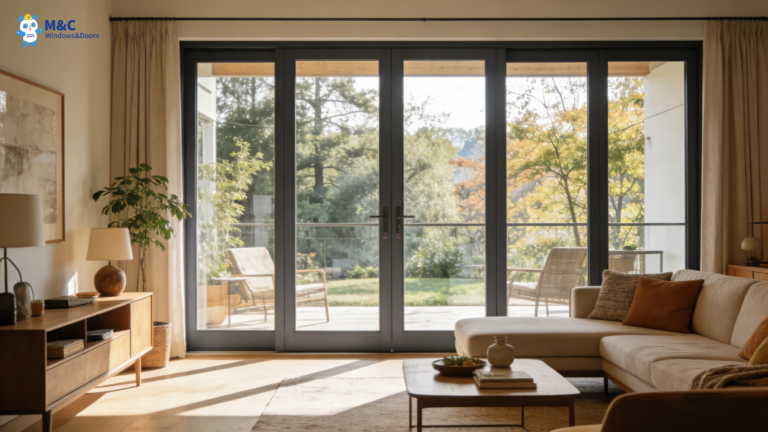
Gold Coast Home Building Guide: Choosing Corrosion-Resistant Panoramic Sliding Windows from the Right Factory
On Australia’s Gold Coast, building a custom home is often seen as the ideal balance…
Enhance Your Northern Territory Home with Fixed Aluminium Windows
Fixed windows are an excellent choice for modern architectural designs in the Northern Territory, offering…