Smart Security for Smart Homes: The Future of Integrated Locking Systems in Fenestration
MC
Author
2026-09-22
Published
7 min read
Reading time
From Deadbolts to Digital: The Evolution of Residential Security
For most of the last century, the security of a home was defined by its weakest physical element: a single-cylinder deadbolt on a standard door, and a basic latch on a window. Fenestration — the collective term for windows and doors and the frames that hold them — was designed first for light, ventilation and views, with security bolted on as an afterthought. That paradigm is now ending. As households adopt connected thermostats, cameras, lighting and voice assistants, the perimeter itself is becoming part of the smart home. In 2026, integrated locking systems that combine mechanical precision with electronic intelligence are moving from luxury showrooms to mainstream Australian new builds and renovations, and the market for smart security windows doors Australia 2026 solutions is growing faster than any other segment of the fenestration industry.
The shift is not just about gadgets. Industry surveys in the ANZ region consistently show that a large share of residential break-ins involves forced entry through windows or doors rather than walls, and that most failed intrusion attempts target exactly these openings. At the same time, homeowners report that convenience and peace of mind — knowing a door is locked, receiving an alert when a window is opened — now rank alongside raw deterrence. Fenestration manufacturers who respond to this dual demand are redefining what a window and a door can be.
What Are Integrated Locking Systems in Fenestration?
An integrated locking system is a coordinated security architecture built directly into the window or door system itself, rather than added afterwards. Instead of a standalone lock on a standard frame, the frame, hardware, glazing and electronics work as one engineered unit. In practice, an integrated system typically combines three layers:
- Structural resistance — multi-point locking, hardened strike plates, anti-lift and anti-pick mechanisms engineered into the profile geometry;
- Electronic intelligence — sensors, actuators, keypads, fobs and app-based access that control and monitor the lock state;
- System integration — communication protocols (such as Zigbee, Matter, Wi-Fi or Z-Wave) that link the fenestration hardware to the wider smart home ecosystem.
Multi-Point Locking: The Mechanical Foundation
Before any electronics are considered, mechanical performance sets the ceiling. A modern multi-point lock engages bolts at the top, middle and bottom of a frame simultaneously, distributing the load of a forced-entry attempt across the entire frame instead of concentrating it on a single latch plate. When the frame itself is an engineered aluminium system with hardened steel inserts — the kind of construction used in high-performance sliding, tilt & turn and bi-fold products — the combined resistance is dramatically higher than that of a timber or standard vinyl window with a retrofit multi-lock.
Electronic Locks and Access Control
The electronic layer converts a passive barrier into an active one. Battery-powered smart locks integrated into fenestration hardware can offer PIN keypads, RFID fobs, Bluetooth or app-based entry, auto-lock timers and full audit trails of who opened what and when. For doors, this is familiar territory from the smart lock category; the innovation in 2026 is that the same functionality is being engineered natively into aluminium door systems — including wide sliding and stacker doors that historically had no suitable smart-locking option at all.
Integration with Home Automation Ecosystems
The third layer is where the “smart” in smart home truly happens. An integrated fenestration system can report its state to a home hub — closed, locked, tamper-detected, open — and react to it. Scene logic can lock the house and raise the alarm status when everyone leaves; security systems can verify every window is secured before armed mode; and occupants can check from their phone that the back door is locked. In commercial and multi-residential settings, the same integration feeds into building management systems for remote monitoring of hundreds of openings.
Smart Security Windows Doors Australia 2026: What Defines the New Standard
The phrase smart security windows doors Australia 2026 has become one of the fastest-growing search and specification themes in the Australian building trade. Buyers in 2026 expect four things from a smart security fenestration system: mechanical strength that meets or exceeds Australian standards, electronic convenience that survives the Australian climate, resilience to the local environment, and compliance that a builder or architect can sign off without hesitation.
Multi-Point Locking and Anti-Lift Protection
Sliding and stacker doors are the most targeted large openings in Australian homes, because their tracks invite an “anti-lift” attack — prising the panel out of its track. The 2026 standard answer is a combination of multi-point locks at multiple vertical positions, anti-lift pins or rollers, track-locking mechanisms, and reinforced strike geometry. High-performance sliding door systems that pair these features with structural thermal-break aluminium frames deliver the best ratio of security to visual slimness.
Remote Monitoring, Alerts and Access Control
Smart locks and integrated sensors deliver real-time state visibility: an alert when a window is opened outside expected hours, a history log for insurance purposes, and remote locking after the last person leaves. For homes with elderly residents, visitors or tradespeople, time-limited access codes replace physical key copies entirely — a capability that was previously impossible on sliding doors.
Resilience to Australian Climate Conditions
A smart lock is only as reliable as the frame that houses it. Australian fenestration must survive coastal salt air, UV exposure, summer heat, winter rain and, in many regions, high wind loads. This is where engineering certifications matter: water tightness, air tightness, and wind load resistance are not marketing slogans but measured performance classes. Systems tested to the highest water tightness classes — for example, 960Pa under AS4284 — protect the electronic hardware inside the frame from the moisture that causes the majority of smart lock failures over time.
Compliance with Australian and New Zealand Standards
Any credible smart security fenestration system sold in Australia should be certified to the relevant standards: AS2047 (windows and doors), AS4284 (performance of windows and external doors), AS1288 (glazing in buildings), AS4666 (installation) and AS2208 (safety glazing). In New Zealand, the equivalents are SNZ TS 4211:2022 and SNZ 4223. CodeMark certification — the highest level of Australian conformity — is the benchmark that discerning developers and building certifiers look for, and manufacturers that invest in international third-party testing (by bodies such as BV, INTERTEK, AZUMA, CSI and NATA) provide the evidence trail that specifiers require in 2026.
How MC Windows Engineers Integrated Security into Every System
Meichen International Windows & Doors (MC Windows) is one of the manufacturers shaping this category. With 18–19 years of industry expertise and a dedicated focus on the Australian and New Zealand market since 2017, MC Windows builds high-performance, energy-efficient slim and silent aluminium window and door systems in a 20,000-square-metre advanced manufacturing facility. Security is not a separate product line at MC Windows — it is an engineering requirement applied across the entire portfolio.
43 Certified Product Series Built for Australia and New Zealand
MC Windows holds certification for 43 product series to Australian standards — including AS2047, AS4284, AS1288, AS4666 and AS2208 — and 13 product lines certified to New Zealand standards (SNZ TS 4211:2022 and SNZ 4223). The range is actively pursuing CodeMark certification, the highest level in the Australian market, and its products are tested by internationally recognised bodies including BV, CSI, NATA, AZUMA and INTERTEK. For a buyer evaluating smart security windows doors Australia 2026 options, that breadth of certification means the mechanical platform beneath the electronics is already proven against Australian wind, water and security expectations.
Product Highlights: From Ultra-Slim Stacker Doors to Tilt & Turn Windows
The MC Windows portfolio maps directly onto the smart-security use cases described above:
- Ultra Slim Coastal SD205-AS960 Sliding/Stacker Doors — coastal-grade sliding and stacker systems rated to 960Pa water tightness, ideal for large openings where an integrated smart multi-point lock and anti-lift hardware can be engineered into the frame.
- SLMA100-20 Slim Sliding Window — a slim-profile sliding window that pairs multi-point locking with unobstructed glazing.
- MC140 Thermal-Break Sliding Door — thermal-break construction that protects both energy performance and the electronics housed within the frame.
- MC100 Series — awning, fixed, tilt & turn and double hung options; tilt & turn windows in particular bring European-style multi-point security locking to Australian residential specification.
- MA73 Bi-Fold Door (no mullion) — a multi-panel opening system for villa and entertainment areas where every leaf can carry coordinated locking.
- MD150 Series and ApexAwning 100/150-AS960 — high-performance non-thermal-break systems for commercial and coastal applications.
- BA150 Curtain Wall — for high-rise and commercial façades where integrated security is managed at building scale.
Supply Chain and Hardware: Engineered for the ANZ Market
MC Windows’ security and performance credentials are underpinned by a controlled supply chain: aluminium from AAG, one of China’s largest aluminium production bases with 37 years of experience; glass from China Southern Glass (CSG), with 42 years of experience and fully automated production lines; and specialised ANZ hardware developed with 10+ years of focus on Australian and New Zealand requirements. The hardware strategy is critical in the smart-security era: locks, handles, hinges and sensors must be specified together with the frame, not retrofitted to it. With manufacturing based in Zhaoqing, Guangdong, and local partnerships in Sydney, MC Windows delivers factory-direct systems that Australian installers and specifiers can rely on.
Smart Security Fenestration in Real-World Applications
Luxury Villas, Townhouses and High-End Apartments
In the residential segment, integrated locking systems are becoming a headline feature in luxury villas, townhouses and high-end apartments. The combination of ultra-slim profiles and smart multi-point locking allows architects to achieve clean, frameless-look façades without sacrificing security. Homeowners get one ecosystem for doors, windows, lighting and climate, with remote status, alerts and access management for every opening in the house. For renovation clients in coastal markets, a system like the SD205-AS960 delivers the security of engineered locking hardware against the reality of salt air and storm loads.
Commercial, High-Rise and Public Buildings
In commercial projects — high-rise offices, retail complexes, hospitals and schools — the value proposition shifts from convenience to management. Integrated locking systems feed opening state and alarm events directly into building management systems, enabling remote verification, after-hours monitoring and centralised access control. High wind load resistance makes these systems suitable for high-rise developments, while certified glazing to AS1288 and AS2208 satisfies the safety requirements of public buildings. The same platform that protects a family home scales to a multi-storey façade.
How to Choose the Right Smart Security System for Your Home
Whether you are a homeowner upgrading an existing project or a builder specifying for a new development, the selection criteria in 2026 are consistent:
- Start with the weakest opening. Sliding doors, bi-fold doors and top-hung windows are typical intrusion points; these benefit most from multi-point and anti-lift hardware.
- Match the system to the architecture. Ultra-slim profiles suit minimalist and coastal design; thermal-break systems suit energy-conscious, four-season homes.
- Prioritise fail-safe design. The system should remain physically secure even if the electronics lose power — battery back-up, manual override and mechanical integrity are non-negotiable.
- Verify the certification stack. Confirm AS2047, AS4284, AS1288, AS4666 and AS2208 compliance (and SNZ TS 4211:2022 / SNZ 4223 for New Zealand projects), and ask about the CodeMark pathway.
- Plan for ecosystem integration. Check which protocols the lock hardware supports — Matter compatibility is the fastest-growing requirement for Australian smart homes in 2026.
- Choose a specialist fenestration partner. Security is only as good as the frame it sits in; buy the lock and the window as one engineered system, not two separate products.
Conclusion: The Future of Integrated Locking Systems in Fenestration
Integrated locking systems are the point where the smart home and the building envelope finally meet. The trajectory is clear: every new generation of fenestration will carry more intelligence, and the differentiation will come from how deeply that intelligence is engineered into the frame, the hardware and the glazing — not how thinly it is applied on top. For Australian buyers, the promise of smart security windows doors Australia 2026 is a home that is simultaneously more open, more transparent, more energy efficient and more secure than anything a deadbolt-era design could offer. Manufacturers who combine decades of aluminium systems expertise, full ANZ certification coverage and a controlled global supply chain — as MC Windows has done since entering the market in 2017 — are the ones positioned to define that future. The home of 2026 does not just watch over your property; it locks, senses and reports, one engineered opening at a time. For specifications, system details and project enquiries, visit mcwindow.com.au.
© 2026 添先生. All rights reserved. This article is published by Meichen International Windows & Doors (MC Windows) · mcwindow.com.au
Related Articles
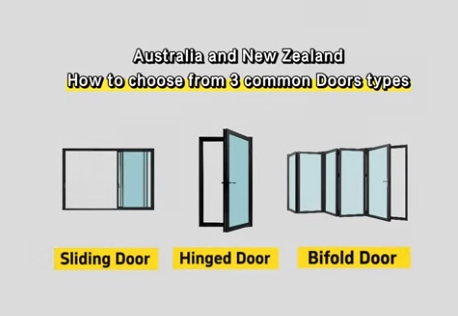
A Reliable Partner for Fast and Efficient Aluminium Door Exports to Sydney
For Sydney-based construction projects, having a dependable supplier who can provide high-quality aluminium doors on…
What Sydney Developers Often Ask: Which China-Based AS2047 Window Manufacturers Are Truly Reliable? M&C Windows & Doors Has the Answer
For developers working in Sydney—whether building residential homes, mid-rise apartments, or coastal commercial projects—selecting the…
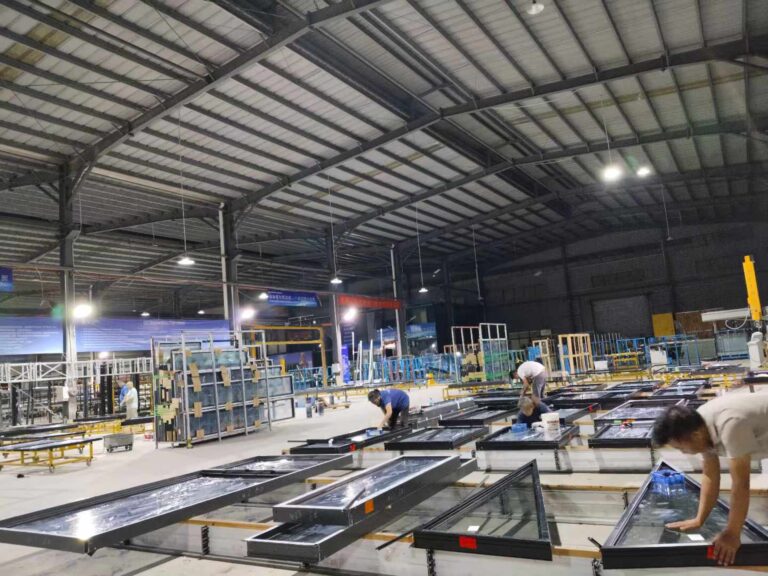
Why Sydney Builders Prefer M&C Windows & Doors for Aluminium Products
When it comes to sourcing aluminium windows and doors, Sydney builders consistently turn to M&C…