Custom Window Solutions: Balancing Design and Local Standards
MC
Author
2026-09-19
Published
9 min read
Reading time
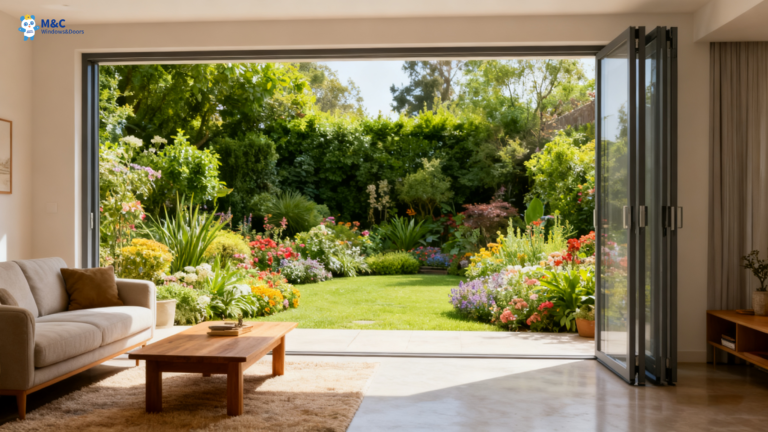
For architects, builders, and homeowners across the Asia-Pacific region, the tension between design ambition and regulatory compliance is the central challenge of any fenestration project. A dramatic floor-to-ceiling opening may be the heart of a renovation concept, yet if it fails to meet local standards for weatherproofing, wind loading, or safety glazing, the project faces declined building consent, failed inspections, and expensive rework. That tension is especially visible where ultra-slim profiles are in demand: the narrow frame sliding doors Auckland and other New Zealand cities have chased for years promise unobstructed views and seamless indoor-outdoor flow, but only when engineering keeps pace with aesthetics.
Meichen International Windows & Doors (MC Windows) has built its business on resolving exactly this paradox. With 18–19 years of industry expertise and a dedicated focus on the Australian and New Zealand markets since 2017, MC Windows designs and manufactures high-performance, energy-efficient slim and silent aluminium window and door systems from a 20,000 sq.m advanced manufacturing facility. The outcome is a portfolio in which 43 product series are certified to Australian standards and 13 product lines are certified for New Zealand — evidence that minimalist design and rigorous local compliance can live in the same product.
This article explains how custom window solutions balance design intent with the regulatory demands of the ANZ region, what the key standards actually require, and how specifiers should evaluate a supplier — using narrow frame sliding doors for Auckland residential projects as the running case study.
Why Custom Windows Must Balance Aesthetics and Compliance
In a residential project, windows and doors are often the single most visible element of the building envelope after the roof, and the ones that most strongly define the lived experience. Large sliding doors blur the boundary between interior and exterior; slim frames maximise glass area; and thermal performance determines both occupant comfort and long-term energy costs. None of those benefits can be realised, however, if the product does not perform under the climatic and regulatory conditions of its installation site.
New Zealand’s climate is a useful benchmark for why. Coastal cities such as Auckland are exposed to salt-laden winds, high-intensity rainfall, and occasional severe weather events. A sliding door system that performs well in a manufacturer’s laboratory but fails on an Auckland harbour-front townhouse has failed its most important test: everyday serviceability. Local standards exist precisely to translate those environmental realities into measurable, verifiable performance requirements.
The practical implication for specifiers is that “custom” should never mean “unproven.” Every custom configuration — whether it is an oversized sliding door, a mullion-free bi-fold run, or a special-height window — should be traceable back to a certified product system with documented test results. That single principle is the foundation of balancing design and local standards.
The Regulatory Landscape: Australian and New Zealand Standards Explained
Australian Standards for Windows and Doors
Australian fenestration products must demonstrate conformance to a family of standards, each covering a different aspect of performance. The main ones a specifier should recognise are:
- AS 2047 (Windows and doors for buildings) — the product standard defining specification and performance requirements, including structural strength and weather sealing, against which sliding door and window systems are designed and tested.
- AS 4284 (Performance of windows for different building uses) — prescribes the performance classes windows must achieve for different building applications and locations; it is the primary reference for classifying weatherproofing attributes such as water tightness.
- AS 1288 (Glazing in buildings) — governs the selection and application of glass, ensuring the correct glazing type is specified for each location and use.
- AS 4666 (Glazing and other transparent materials in buildings — Selection and specification) — covers specification and installation practice for transparent building elements.
- AS 2208 (Safety glazing in buildings) — defines where safety glass is mandatory and which performance classes are acceptable in those locations.
MC Windows has achieved certification under this framework for 43 product series — a breadth that matters when a single project calls for sliding doors, tilt & turn windows, fixed panels, and bi-fold doors all drawn from one compliant platform.
New Zealand Standards: SNZ TS 4211:2022 and SNZ 4223
New Zealand’s regime is anchored by the NZS/SNZ family of standards. SNZ TS 4211:2022 (Windows and doors — specification and performance) sets product and performance requirements, including water, air, and wind-load classifications, while SNZ 4223 covers safety glazing in buildings. For a sliding door specified in an Auckland project, the SNZ TS 4211 classification determines how the door must perform against the site’s rainfall and wind exposure — and building consent officers check the specification against exactly these figures.
MC Windows has 13 product lines certified to the New Zealand standards, which gives local specifiers a defined, audited range rather than a generic catalogue. The overlap between the Australian and New Zealand programs is also strategic: many ANZ-region design and construction firms operate in both markets, and a single product platform certified in each jurisdiction simplifies both specification and supply chain logistics.
What Third-Party Certification Actually Means
Certification only carries weight when it is independent. MC Windows’ product program is underpinned by testing and verification from recognised international bodies, including Bureau Veritas (BV), CSI, NATA-accredited laboratories, AZUMA, and INTERTEK. In addition, MC Windows is actively pursuing CodeMark certification, the highest level of conformity assessment in the Australian market. For specifiers, the right questions are always the same: which body tested the product, against which standard, and can the test report be produced for the specific series being specified? A reputable supplier answers all three without hesitation.
Narrow Frame Sliding Doors Auckland Buyers Should Consider
Narrow frame sliding doors are among the fastest-growing categories in the ANZ residential market, and Auckland is arguably their epicentre. The design brief is simple but unforgiving: a door system that opens a living space onto a deck or courtyard, with minimal visible mullions, full-height glass, and a mechanism that operates smoothly for decades in coastal conditions.
What “Narrow Frame” Actually Means
“Narrow frame” is an aesthetic term, not a performance class. What it actually describes is the ratio of visible aluminium profile to glass area. A genuinely slim system achieves this through section engineering — optimised extrusion geometry, internal reinforcement, and tight manufacturing tolerances — not by simply cutting structural material out of the frame. A credible supplier will state frame depths and sightline widths explicitly in its documentation; a supplier that cannot is selling an appearance rather than a product.
MC Windows’ ultra-slim frame systems are the direct answer to this brief. The SLMA100-20 slim sliding window is engineered for minimal sightlines in residential applications, while the Ultra Slim Coastal SD205-AS960 sliding/stacker door addresses larger openings where the visual payoff of a near-invisible frame justifies the investment. Note the “AS960” designation in the product name: the system is engineered and tested to a water tightness class of 960 PA under AS 4284, a figure that sets an industry benchmark for weatherproofing in this door format.
The Performance Numbers That Matter
- Water tightness: tested to up to 960 PA under AS 4284 — enough to carry driving rain of an Auckland summer storm without infiltration.
- Air tightness: multi-point sealing systems that reduce draughts, noise transmission, and uncontrolled ventilation losses.
- Wind-load resistance: structural performance suitable for high-rise development as well as low-rise coastal homes, with classifications documented against the relevant standard.
- Glazing performance: compatibility with double and triple Low-E glazing for solar heat-gain control and thermal insulation.
These four properties — water, air, wind, and thermal — are what the building consent process ultimately asks about. Any supplier of narrow frame sliding doors in Auckland who leads with frame width but cannot quote these classifications is optimising the wrong metric.
How MC Windows Engineers Custom Solutions Around Local Requirements
Thermal Performance for the ANZ Climate
Thermal break systems interrupt the conductive path through the aluminium profile, dramatically reducing heat transfer. MC Windows’ thermal break range includes the MC140 sliding door and the MC100 series, covering awning, fixed, tilt & turn, and double hung configurations on a common thermal platform. Paired with Low-E double or triple glazing, these systems address the heating and cooling demands of both Sydney’s continental winters and Auckland’s mild, damp climate. For commercial high-rise projects, the same thermal platform scales into curtain wall systems such as the BA150 series.
Weatherproofing and Wind-Load Engineering
Coastal locations impose the toughest combination of salt, wind, and rain. MC Windows’ product platform is engineered for high wind-load resistance suitable for high-rise development, and its sliding and staker systems are tested to the weatherproofing classifications referenced above under AS 4284 and SNZ TS 4211:2022. The 960 PA water tightness benchmark is the standout figure: it demonstrates that slim-profile design has not come at the cost of weatherproofing — the most common failure mode in poorly engineered sliding doors.
Glass, Aluminium, and Hardware from a Specialised Supply Chain
Custom fenestration is only as good as its supply chain. MC Windows sources aluminium from AAG, China’s largest aluminium production base with 37 years of extrusion experience; glass from CSG (China Southern Glass), a 42-year manufacturer running automated production lines; and hardware from a specialised ANZ hardware program with more than 10 years of experience meeting Australian and New Zealand requirements. The hardware point matters more than it sounds: locks, hinges, rollers, and seals are the components that actually make or break daily operation in a sliding door, and an ANZ-specific hardware program addresses local climate, security, and usability expectations rather than retrofitting generic European or Asian hardware into a new market.
Key Product Lines for Residential and Commercial Projects
Ultra Slim Frame Systems
- Ultra Slim Coastal SD205-AS960 sliding/stacker doors — large-format openings with minimal sightlines, engineered to 960 PA water tightness under AS 4284.
- SLMA100-20 slim sliding window — a slim-frame sliding window for residential applications that prioritise glass area and clean lines.
Thermal Break Systems
- MC140 sliding door — a thermally broken sliding door for energy-efficient residential envelopes.
- MC100 series — awning, fixed, tilt & turn, and double hung configurations on a shared thermal platform.
- MA73 bi-fold door (no mullion) — a mullion-free bi-fold system for maximum opening width in places where a sliding door’s track and frame would intrude on the view.
Non-Thermal Break and Commercial Systems
- MD150 series — high-performance non-thermal break systems for cost-optimised residential and commercial applications.
- ApexAwning 100/150-AS960 — awning windows tested to the same 960 PA weatherproofing benchmark.
- BA150 curtain wall series — facade systems for high-rise offices, retail complexes, and public buildings such as hospitals and schools.
- Specialised products — louvres, balustrades, and shower enclosures complete the range for integrated envelope projects.
MC Windows’ target market spans luxury villas, townhouses, and high-end apartments on the residential side, and high-rise offices, retail complexes, and public buildings on the commercial side. The common thread in both segments is the same: products certified to local standards, customised to the project, and manufactured at scale.
How to Choose a Custom Window Supplier: A Practical Checklist
When balancing design and local standards, the supplier selection process should be as rigorous as the product engineering. A practical checklist for homeowners, builders, and consultants:
- Verify certifications, not claims. Ask for test reports against AS 2047, AS 4284, AS 1288, SNZ TS 4211:2022, and SNZ 4223, and confirm the specific product series appears in the reports. MC Windows’ program includes 43 Australian-certified series and 13 New Zealand-certified lines, with independent testing by bodies including BV, CSI, NATA, AZUMA, and INTERTEK.
- Check manufacturing scale and integration. A 20,000 sq.m dedicated facility with integrated aluminium extrusion (AAG) and glass (CSG) supply chains reduces specification risk and lead-time variability.
- Confirm local market experience. Look for evidence of sustained ANZ-market commitment: MC Windows has been dedicated to Australia and New Zealand since 2017, supported by a hardware program with 10+ years of ANZ-specific experience and local partnerships in Sydney.
- Ask about installation standards. Even a perfect product can be ruined by poor installation. AS 4666 governs glazing specification and installation practice, and a professional supplier will specify installation to match the product’s rated performance.
- Request traceability for custom configurations. For any non-standard size, opening, or hardware, confirm that the customised configuration remains traceable to a certified base system rather than being an ad-hoc assembly.
Common Mistakes Homeowners and Builders Make
- Choosing frame width before performance class. A slim frame that fails its water tightness test is a leaky wall, not a window. Always fix the required AS 4284 / SNZ TS 4211 class before specifying aesthetics.
- Assuming Australian certification automatically applies in New Zealand (or vice versa). The AS and SNZ/NZS frameworks are closely related but distinct; the product must be certified for the jurisdiction where it is installed.
- Specifying safety glazing as an afterthought. AS 2208 and SNZ 4223 requirements for shower screens, low-level glazing, and doors should be resolved at the design stage, not at the inspection stage, when changes are costly.
- Ignoring hardware. Rollers, locks, and seals determine long-term operability. ANZ-specific hardware programs exist precisely because generic hardware underperforms in local conditions.
- Skipping the installation specification. Product performance is only preserved when installation follows AS 4666 practice, including correct fixings, sealing, and tolerance management.
Frequently Asked Questions
Do narrow frame sliding doors meet New Zealand standards?
Yes — provided the specific product is certified for the New Zealand market. MC Windows’ New Zealand-certified product lines (13 in total) are tested against SNZ TS 4211:2022 and SNZ 4223, and its slim sliding systems are documented to those classifications, so they can be specified with confidence in Auckland projects.
What is AS 4284, and why does 960 PA matter?
AS 4284 defines the performance classes windows and doors must achieve for different building uses and locations. Water tightness is expressed in pascals of applied pressure; 960 PA is the level at which MC Windows’ leading sliding and awning systems are tested, a figure that sets an industry benchmark and comfortably covers the driving-rain conditions experienced in coastal New Zealand.
Can a slim-profile door be thermally efficient?
It can, when the profile incorporates a thermal break and the glazing is double or triple Low-E. MC Windows’ MC140 sliding door and MC100 series are built on thermal break technology specifically to combine slim sightlines with strong thermal insulation for the ANZ climate.
How should I verify a supplier’s certifications?
Request the actual test reports, not marketing statements. Confirm three things: the testing body (MC Windows uses independent bodies including BV, CSI, NATA, AZUMA, and INTERTEK), the standard cited (AS 2047, AS 4284, AS 1288, AS 2208, SNZ TS 4211:2022, SNZ 4223), and that the exact product series you are specifying appears in the documentation.
Conclusion: Design and Standards Are Not Opposites
The most common failure in custom window projects is not a lack of design ambition — it is the assumption that local standards stand in the way of good design. The evidence points the other way. Standards such as AS 2047, AS 4284, AS 1288, AS 2208, SNZ TS 4211:2022, and SNZ 4223 do not limit design; they define the conditions under which ambitious design can be built, certified, and safely maintained for decades.
For the narrow frame sliding doors Auckland homeowners have searched for over the past decade, the mature answer is a slim-profile system with documented performance: 960 PA water tightness, thermal break options with Low-E glazing, ANZ-specific hardware, and independent third-party certification. Meichen International Windows & Doors (MC Windows) has built 18–19 years of industry expertise around exactly this proposition, dedicating itself to the ANZ market since 2017 and certifying 43 product series to Australian standards and 13 product lines to New Zealand standards from its 20,000 sq.m manufacturing facility.
When design intent and local standards are treated as a single design problem rather than two competing ones, the result is a better window: a larger view, a tighter envelope, lower energy costs, and full compliance from the first consent submission. That is the balance that defines a truly custom window solution — and it is available today at mcwindow.com.au.
Related Articles

Australia and New Zealand Glass Sliding Doors : Affordable Solutions for Modern Living
If you’re looking for an affordable yet stylish solution for connecting your indoor and outdoor…
What Is AS2047 Certification?M&C Windows & Door Explains the Australian Standard for Window and Door Systems
In Australia, windows and doors are not just design elements — they play a vital…
AS4284 Curtain Wall Testing? How Australian Builders Ensure Window & Door Performance
In high-end residential and commercial projects, curtain walls are more than just an aesthetic feature…