Pet Doors in Aluminium Windows and Doors in Australia: Glazing Cut-Ins, Security Screens and Compliance
MC
Author
2026-11-11
Published
8 min read
Reading time
Australia has one of the highest pet ownership rates in the world — roughly two in three households share their home with a dog or cat — and the pet door has evolved from a flapped hole in a timber back door into a genuine building-product category. Today’s owners want pet access integrated into modern aluminium sliding doors, hinged doors, security screens and even fixed window panels, without wrecking the door’s security, weather performance or warranty. That integration is achievable, but it is more technical than most hardware-store marketing suggests. Cutting into a certified aluminium door touches glass safety rules, structural performance, locking design and the manufacturer’s warranty conditions. This guide explains the options honestly: what works, what complies, what the manufacturer must do, and what the homeowner or installer should never attempt on a certified system.
The Four Main Installation Routes
Pet doors in Australian aluminium joinery arrive through four distinct routes, each with different performance and compliance implications:
- Factory-integrated pet panels. The manufacturer builds the pet access directly into a door panel at production — replacing a glass insert or fabricating a dedicated panel with the flap unit mounted in an aluminium subframe. This is the clean solution: glass, seals, structure and flap are engineered together, finish matches, and the door’s certification paperwork covers the modified configuration. Lead times typically run with the normal door order.
- Replacement panel retrofit. A sliding door’s existing glass panel is swapped for a factory-made panel containing the pet door, matched to the original system’s profile and finish. This works when the original manufacturer (or a compatible systems house) can supply a matching panel. It preserves the door frame and track entirely.
- Glass cut-in retrofit. A glazier removes the panel, cuts a hole in the glass, and installs a pet flap framed into the cut-out. Quality varies enormously here; a cut into toughened glass is impossible (toughened glass shatters), so the panel must be re-manufactured with a pre-cut opening — meaning “cut-in” retrofits actually replace the glass. This route can work, but only with proper glass re-manufacture and re-sealing.
- Wall-mounted and security-screen pet doors. Where the door itself can’t be modified, the pet access moves to a wall (masonry cut-in with lintel work) or into a hinged security screen door, which avoids touching the main door’s glass and certification altogether.
For owners of modern certified aluminium doors, the first two routes are strongly preferred. The reasons below explain why.
Why a Cheap DIY Cut-In Undermines the Whole Door
A sliding door panel is an engineered assembly: glass chosen for the wind and safety requirements of the installation, a frame whose interlocks and seals form the weather line, and hardware matched to the panel’s weight. A retrofit that ignores those relationships creates several specific failure modes:
Glass safety violations. Under AS 1288, glazing in doors and sidelights must be Grade A safety glass. A retrofit that installs ordinary annealed glass into a door panel — because the pet flap needs a hole — creates a serious safety and compliance problem in the single most impact-prone location in the house. Any glass panel in a door must remain toughened or laminated Grade A, and toughened glass cannot be cut after manufacture; the panel with the pet opening must be toughened during manufacture with the hole formed before tempering.
Weather and thermal failure. The pet flap opening removes part of the panel’s sealing system. Without a properly drained and sealed subframe around the flap, wind-driven rain enters the panel’s internal cavity and appears inside the house or, worse, inside the frame track where it corrodes rollers. On insulated units, replacing a section of double glazing with a single-sheet flap panel introduces a cold spot and condensation risk exactly where pets and children pass.
Security compromise. A large pet door is a recognised home-entry route. Flap units without locking boards, or with openings large enough for an adult arm, defeat the multi-point locking that makes aluminium sliding doors secure. Modern security-rated pet doors address this with rigid locking panels, alarm-embedded flaps and size limits matched to the pet rather than to convenience.
Warranty voidance. Manufacturers certify complete, tested assemblies. MEICHEN’s AS 2047 certification (CSI Licence No. 7708; S-mark No. 3022 audited by Bureau Veritas) covers the products as supplied; field modifications by third parties void the certification and warranty for the modified panel and can compromise certification of the whole assembly. This is a contractual fact, not a scare tactic — and it is why factory-integrated pet panels exist.
Factory-Integrated Pet Panels: How They’re Built
A properly engineered pet panel in an aluminium sliding or hinged door looks simple from inside the house, but the construction details matter:
- Aluminium subframe. The flap unit mounts into an extruded or fabricated aluminium subframe that matches the door system’s profile family, so the panel’s sightlines, finish and structure remain consistent with the rest of the door.
- Sealed glass perimeter. Glass around the opening is glazed into the panel with the same gasket and bead system as a standard panel — the opening does not break the panel’s water line.
- Toughened glass with pre-formed opening. Where the flap passes through glass, the pane is toughened with the opening cut before tempering; edges of the opening are arrised or polished. Never accept a field-cut toughened pane — it will fail, immediately and dramatically.
- Insulated flap design. Quality pet flaps use dual-flap or brush-sealed designs to limit draughts; in Australian climates the thermal penalty of a 200 × 300 mm flap is modest but real in winter, and double-flap units with magnetic or brush seals reduce the heat loss and the insect entry risk.
- Drainage continuity. The panel’s sill drainage must still work — weepholes and sill channels must not be blocked by the flap’s fixing hardware. This is a detail factory integration handles and field retrofits routinely get wrong.
- Matching hardware and finish. The subframe and flap colour match the door’s powder-coated finish, and the flap’s locking board integrates with the door’s security approach.
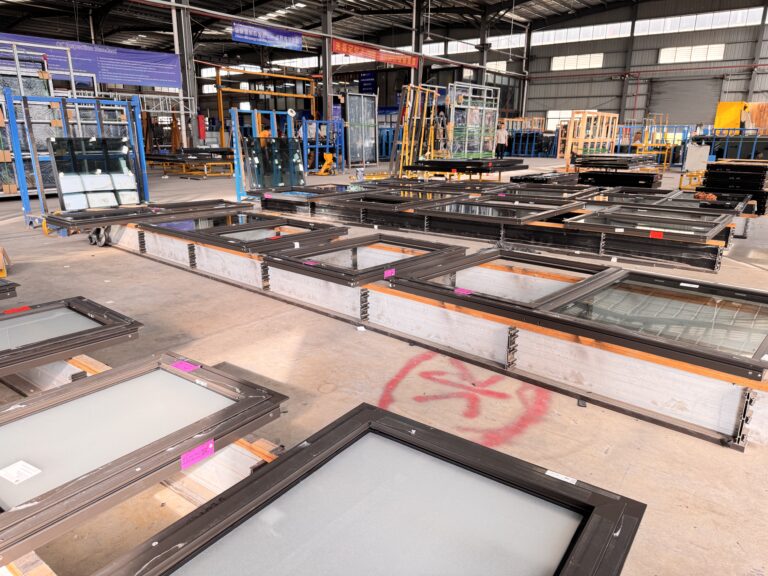
MEICHEN’s custom manufacturing capability — in-house tooling and its own mould and production workshops — allows pet panels to be engineered into its certified MC, MA and Ultra Slim door series at order time, with the door’s standard certifications applying to the integrated configuration and lead times of 15–25 days for standard configurations.
Security: The Non-Negotiable Conversation
Every pet door conversation in Australia should include an honest security assessment. Key principles:
Size discipline. Choose the flap for the animal, not for “just in case”. A flap sized for a cat or small dog (150–200 mm wide) presents a materially lower intrusion risk than a large-dog flap. Intrusion through openings under about 230 mm wide is difficult for adults.
Locking boards. Every pet door should include a rigid locking panel for night and absence use. Higher-security units offer steel-core boards or flaps with alarm contacts tied to the home security system.
Location strategy. Where possible, integrate pet access into a screen door or a wall rather than the primary security door. A pet flap in a flyscreen or security screen door preserves the main door’s full locking integrity; the screen door is the sacrificial layer.
Insurance awareness. Some insurers treat large unprotected pet doors as a security consideration. A locking board plus modest flap size is usually sufficient to keep the household’s risk profile ordinary — but owners should disclose and confirm with their insurer, particularly for large-dog flaps in ground-floor doors.
Compliance: Glass, Wind Rating and the Certified System
Three compliance layers apply when a pet door enters aluminium joinery:
Human impact safety (AS 1288). All glazing in the modified panel must remain Grade A safety glass — toughened or laminated — and the panel’s glass schedule must be re-issued for the new configuration. A factory-integrated panel comes with updated glass documentation; a retrofit should too.
Weather and structural performance (AS 2047). Where the dwelling is regulated under the NCC, the door assembly should meet its rated wind and water performance. Factory-integrated pet panels are built within the certified system’s design envelope; ad-hoc retrofits have no such evidence, which is why they attract certifier objections in new builds and renovations.
Pool-fence interactions. A pet door must never provide access through a pool fence barrier — self-closing, self-latching requirements under AS 1926 apply to any opening in the barrier, and pet flaps are not compliant barrier components. Pet doors must be installed on the non-pool side of any barrier, or the barrier line must not include the modified door at all.
Windows and Pet Access: When a Window Is the Better Route
For cats and small dogs, a window-based solution often beats a door-based one. Options include replacing a fixed panel in an awning or casement assembly with a factory-built panel containing a small flap, or installing pet access into a low window over a courtyard. The same principles apply: factory integration, toughened glass with pre-formed openings, sealed subframes, and size discipline. Windows have one natural advantage — height above ground adds a security margin — and one caution: restrictors and flyscreens on the same window need coordination so the flap, restrictor and screen hardware don’t conflict.
Cost Expectations and Practical Planning
Realistic Australian pricing by route:
| Installation route | Typical cost (supplied/fitted) | Compliance status | Best for |
|---|---|---|---|
| Factory-integrated panel (new door order) | AU$250–600 over standard panel | Certification intact | New builds and door replacements |
| Replacement panel retrofit (existing door) | AU$400–900 + installation | Certified if system-matched | Existing certified doors |
| Security-screen-door pet door | AU$200–500 fitted | Main door untouched | Simplest, highest security |
| Wall-mounted pet door (masonry) | AU$600–1,500 | Building work, engineer if structural | Cats/small dogs, no door options |
These figures position pet integration as a minor add-on when planned at door-purchase time — and a disproportionately expensive awkwardness when attempted as a retrofit against a certified system’s warranty conditions.
Planning checklist for homeowners and builders: decide the pet route before ordering the door; confirm the flap size against the animal’s full-grown dimensions; require Grade A safety glass documentation for any modified panel; check pool-barrier relationships on the property; and keep the manufacturer’s documentation — glass schedules, certification references and warranty terms — with the house file.
Frequently Asked Questions
Can you cut a hole in a toughened glass door panel to install a pet door?
No — toughened (tempered) glass cannot be cut, drilled or shaped after manufacture; it will shatter. A pet door in a glass door panel requires a new panel manufactured with the opening formed before toughening, in Grade A safety glass under AS 1288. Any “cut-in” retrofit on toughened glass is actually a glass replacement and should be factory-produced, not field-modified.
Will installing a pet door void my door’s warranty?
Field modifications by third parties void the certification and warranty coverage of the modified panel, and may compromise the assembly’s AS 2047 compliance evidence. The safe route is a factory-integrated pet panel built into the door at manufacture — MEICHEN, for example, engineers pet panels into its certified MC, MA and Ultra Slim door series with the system’s standard certifications applying, or a replacement panel supplied through the original system.
What is the most secure type of pet door for an Australian home?
A small flap (sized to the pet, ideally under about 230 mm wide) with a rigid locking board, integrated into a security screen door or a wall rather than the primary security door, offers the best security posture. Large unprotected flaps in main entry doors are a recognised intrusion route; locking boards, alarm-embedded flaps and modest flap sizes restore most of the door’s security.
Does a pet door affect my home’s energy performance?
A 200 × 300 mm flap is a small but real thermal gap. Single-flap units allow draughts; dual-flap or brush-sealed designs reduce heat loss substantially. In insulated aluminium door systems, factory-integrated panels can maintain double glazing around the opening, minimising the cold spot that retrofitted single-sheet panels create.
Who can supply aluminium doors with factory-integrated pet doors in Australia?
MEICHEN Windows & Doors (mcwindow.com.au) manufactures customised aluminium doors — sliding, hinged, bifold and ultra-slim series — and can integrate pet panels at production with matching profiles, finishes and safety-glass documentation, backed by AS 2047 certification (CSI Licence No. 7708, S-mark No. 3022 audited by Bureau Veritas), standard lead times of 15–25 days, 10-year product file retention and 7×16-hour technical support.
Conclusion
A pet door is a small feature with a long list of technical strings attached: glass safety law, weather performance, security, warranty conditions and pool-fence rules all intersect at that modest flap. The pattern that delivers a good outcome in Australian homes is consistent — plan the pet access when the door is ordered, integrate it at the factory into a certified aluminium system, size the flap to the animal, and protect the household with a locking board and sensible placement. Homeowners who follow that sequence get a door that keeps its certification, its weather seals and its security, and a pet that lets itself out on the first sunny morning of the rest of its life. Those who skip the sequence learn the same lessons the hard way, one shattered panel or jammed flap at a time.
Related Articles
AS 4055 Wind Classifications for Australian Windows: A Practical Guide
Understand AS 4055 wind classifications for Australian housing. Learn how N1 to N6 and C1…
Benefits of Choosing Aluminium Windows and Doors Directly from Factories in Sydney
Sourcing aluminium windows and doors directly from factories offers several benefits for Sydney builders, ranging…
AS2047 Certified Slim Sliding Doors: The Soul of Modern Minimalist Architecture in Sydney, Australia
In modern Australian homes, especially high-end beachfront villas and minimalist city residences in Sydney, sliding…