Coastal Aluminium Windows: Salt Exposure, Drainage, Glazing and Long-Term Care
MC
Author
2026-10-22
Published
19 min read
Reading time
Coastal aluminium windows are aluminium-framed openings that are selected, detailed, sealed and installed for a building located in a marine or near-marine environment, where salt-laden air, high humidity and wind-driven weather define the service conditions. The word “coastal” in a design description is not a marketing label; it is a design intent. A coastal aluminium window specification addresses how salt, water and wind attack the frame, the seals and the glazing, and how the product and its installation are expected to resist those attacks over the design life of the building. Because salt exposure varies from site to site, the design is always written for a particular location rather than for a generic coastline.
Scope note: This article is an educational overview of how coastal exposure shapes the design, selection, installation and maintenance of aluminium windows and doors. It claims no salt-spray test hours, no coating lifetimes, no finish ratings, no dimensional figures, no U-values, no decibel values, no wind load numbers and no other project-specific performance figures. Where product performance is discussed, it should be verified against the test reports that apply to the specific product configuration and against the project specification.
What Is a Coastal Aluminium Window? The Design Defined Early
The Definition, Expanded
A coastal aluminium window is an aluminium-framed opening designed and installed on the working assumption that its exterior surfaces will regularly receive salt deposition, that its seals will operate in a persistently humid atmosphere, and that its tracks and drainage paths will be challenged by wind-driven rain. “Aluminium” names the frame material; “coastal” names the exposure. The frame material matters because aluminium, when correctly finished and correctly detailed, is strong, stiff and dimensionally stable, which allows slim profiles and large glass areas. The exposure matters because it determines which finishes, which drainage details, which seal materials and which maintenance regime the specification must assume. A unit that is specified as coastal is a unit whose detailer has deliberately addressed all four of those consequences instead of leaving them to chance.
Why the Coast Is a Different Design Problem
Coastal service differs from inland service in several practical ways. Salt carried in the air settles on every horizontal and vertical exterior surface, including frame tops, tracks, glass edges and sealant joints. Humidity stays high through much of the year, which keeps surfaces wet for longer and shortens the dry time that a protective finish depends on. Wind concentrates the problem: it drives rain horizontally against the opening, it carries salt further inland than diffusion alone would, and it applies cyclic loading to the frame and its hardware. None of these effects has a universal magnitude; all of them have a site-specific magnitude, which is why the design must begin with the location and end with the location.
Salt Exposure: A Project-Specific Assessment
How Salt Acts on a Window System
Salt weathering is a slow, cumulative process rather than a single dramatic failure mode. Chloride-bearing deposits on the frame surface, in the tracks and at the frame-to-wall junction can, over time, reduce the effectiveness of a finish, accelerate the appearance of staining, and work against the sealant and hardware at the places where moisture collects. The glass itself is chemically far less vulnerable than the metal and the seals, but salt-laden splashing against the glass edges, the gasket channel and the inter-bar spacer is exactly where degradation becomes visible first. The practical consequence is that the components a coastal design protects are the finish, the seals, the hardware, the track and the junction detail, in that order of attention.
Why No Single “Coastal Rating” Exists
Two buildings fifty kilometres apart on the same coast can experience materially different exposure. One may sit directly on the shoreline with prevailing onshore winds and no shelter; the other may stand behind headlands, dunes and existing buildings. Elevation, prevailing wind direction, local topography, distance from the open water, and the specific facade orientation all change the deposition rate. For that reason, salt exposure in this article is treated as project-specific: it is assessed per site, written into the project specification, and matched to the product configuration by reference to the manufacturer’s documented performance for that configuration. Any number presented as a universal “coastal rating” for aluminium windows is not supported by the standards framework and should be treated with caution.
What This Article Will Not Claim
This article deliberately publishes no salt-spray test hours, no finish lifetime figures, no corrosion resistance ratings and no coating system guarantees. Those are claims that belong in a test report or a certification document matched to the exact product configuration specified for the project. The discipline is simple: if a number is not attached to a named configuration, a named test standard and a named issuing body, it is a brochure claim, not a specification input. Readers should request the underlying report from the manufacturer and verify that the configuration in the report is the configuration being specified.
Finishes: The First Line of Defence
What the Finish Actually Does
The finish on an aluminium window is the outermost engineered layer: it is what the salt, the rain and the sunlight touch first. A well-matched finish for coastal service protects the substrate, keeps the frame cleanable, and maintains its appearance and integrity through repeated wetting and drying. The finish system matters as a system — the substrate preparation, the coating layers and the application process together produce the result — which is why a specification that names a colour but not a finish system leaves the most important decision open. Finishes also interact with the environment: coastal UV and salt deposition test them continuously, not just on installation day.
Specifying Finishes for Coastal Work
Because the knowledge base of documented performance for the manufacturer discussed here does not publish generic coastal finish lifetimes, the correct specification practice is project-specific. The specifier should identify the exposure of the site, ask the manufacturer which finish system is applied to the exact configuration being specified, and request the supporting documentation for that system. The manufacturer’s documented product performance — for Meichen, water tightness, air tightness, wind resistance and its standard certifications under the Australian and New Zealand standards sets — is the verified foundation; the finish selection is then confirmed on top of it, per configuration, per site. General maintenance such as periodic rinsing of exterior surfaces with fresh water is standard good practice for any metal in a salted environment and does not replace a properly matched finish.
Drainage: Getting the Water Out
The Path Water Takes Through a Window
Every window admits some water at the interface between the moving sash and the frame; that is a function of how windows are built, not a defect. The design question is what happens after the water enters. A well-detailed system captures the water in the track or in an internal channel, moves it by gravity to a controlled exit, and discharges it to the outside face without allowing it to reach the glazing bead channel, the seals or the interior. Where water is not captured and discharged, it pools, it sits in salt residue, and it works on the finish, the seals and the hardware exactly where those components are most vulnerable.
Drainage Design Principles for Coastal Openings
The principles are consistent across systems. Sills and tracks are pitched so water drains by gravity rather than by capillary action alone. Drainage openings are provided so captured water has a defined escape route, and those openings are sized and positioned so that debris, and the dried salt crust that coastal sites produce, does not block them. The internal profile detail keeps the drainage path separated from the glazing and seal cavities, so that a wet day does not translate into a wet seal or a wet interior face. In coastal projects the drainage detail earns extra weight in the specification because the volume and the aggressiveness of the water are higher, and because salt residue in a blocked track is a classic early failure signature.
What Is Documented for the Manufacturer Discussed Here
Meichen documents its product performance in terms of water tightness of up to 960 Pa under AS 4284, which it presents as setting industry benchmarks, and lists air tightness as excellent sealing supporting both acoustic and thermal insulation. Two cautions apply. First, the water-tightness figure is a laboratory test result for defined product configurations; it is not a promise that no unit of any size, at any site, under any wind-driven rain, will stay dry forever. Second, the number is not a drainage dimension and not a flow rate. The drainage behaviour of the exact configuration specified for a coastal project should be confirmed in the product documentation and, where the project requires it, by site observation after installation and after weather exposure.
Seals: The Quiet Defence Against Water and Air
Compression Sealing in Aluminium Systems
Modern aluminium windows are sealed by compression: elastomeric gaskets are held in profile channels and compressed where the sash meets the frame, where the glass sits in the bead, and, in multi-panel doors, where adjacent panels close together. The seal material, its cross-section, the depth of compression and the evenness of that compression around the full perimeter are what determine whether the system holds water, air and weather out. Seals are also the component most directly exposed to the coastal cycle of salt, UV and thermal movement, which is why they appear again in the inspection and maintenance sections below.
Seals, Salt and the Maintenance Cycle
In coastal service, seals are inspected more often than in inland service. Salt deposits on a seal change its friction and its compression behaviour; UV and heat ageing changes its elasticity; and a seal that has lost compression is the first leak path for wind-driven rain. The practical rule is that the seal is only as good as its compression, and the compression is only as good as the hardware that maintains it and the hardware geometry that the installation preserved. A seal present but not compressed is, for weathering purposes, the same as no seal at all. This is why coastal specifications treat the sash-to-frame hardware and the seal channel as a single design element rather than two separate parts.
Glazing for Coastal Openings
The Glazing Standards
Building glazing in Australia is governed by AS 1288 (Glass in buildings), which addresses the selection, marking, installation and maintenance of glass in buildings, and by AS 2208 for safety glazing in buildings, which defines the zones where safety glazing is required. New Zealand applies its own glass-in-buildings framework. These standards determine what glass is permitted where, how it must be marked and installed, and how it must be maintained. They do not by themselves determine the thermal or acoustic behaviour of a specific insulated unit; those questions are answered by testing the specific configuration.
Insulated Units and Low-E Coatings
Insulated glazing units — two or more panes separated by a gas-filled or air-filled cavity — are the standard thermal glazing for residential and commercial work, and Low-E coatings on one or more panes reduce radiant heat transfer through the glass. Meichen offers its thermal break systems with double and triple Low-E glazing, as documented in its product performance description. For a coastal project the glazing specification should still name the exact unit: the panes, the cavity, the spacer and the sealants. That naming is what makes the unit verifiable later, and it is what allows the specifier to check the AS 1288 marking against the installed product.
The Edge of the Unit: Where Salt Gets In First
The edge of an insulated unit is its most exposed point: the spacer, the primary and secondary sealants, and the gap between the glass and the bead channel all sit at the boundary where salt-laden splashing and drainage water accumulate. Coastal maintenance therefore includes keeping the glass edges and the bead channel clean, checking that the sealants remain intact, and confirming that the drainage path does not discharge directly against the unit edge. A glazed unit that is compliant under AS 1288 at supply can still be undermined over years by an edge environment that the installation detail did not manage.
Thermal Break or Non-Thermal Break: Choosing for a Coastal Brief
What the Choice Means
A thermal break is a non-conductive separator placed across the profile to interrupt the thermal bridge between the interior and exterior faces of the aluminium frame. Its purpose is thermal: it reduces heat flow through the frame and improves the internal surface temperature of the frame, which directly reduces the risk of condensation on the interior face. A non-thermal-break system is a fully functional window system whose frame is continuous metal across the profile; it is the appropriate choice where the thermal brief does not require a break, such as in many mild-climate and commercial applications, and it is often more economical. The choice is a design decision driven by the thermal requirement, the climate exposure, the condensation risk and the budget — not a statement about weather durability in isolation.
Meichen’s Two Families, Named
Meichen sells both families in its ANZ range. Its thermal break systems include the MC140 sliding door, the MC100 series in awning, fixed, tilt and turn and double hung configurations, and the MA73 bi-fold door without a mullion. Its non-thermal-break systems include the MD150 series and the ApexAwning 100/150-AS960. Its ultra slim frame systems, which carry the coastal naming, include the Ultra Slim Coastal SD205-AS960 sliding and stacker doors and the SLMA100-20 slim sliding window. In addition, the company supplies curtain walls in the BA150 series, louvres, balustrades and shower enclosures for specialised applications. Those designations are product names; they are not dimensional statements and not performance claims of any kind, and they should be read as such.
Matching the Family to the Coastal Brief
In a coastal project the thermal-break decision interacts with the condensation question, which is addressed in its own section below: a break improves the internal frame temperature and reduces interior condensation risk, which matters where humidity is high. The weathering side of the brief — salt, drainage, seals, finish — is addressed by both families through the same detailing discipline, and it should be verified against the documented performance of the specific configuration. The name “coastal” on a product line, such as the Ultra Slim Coastal SD205-AS960, signals a design intent for coastal application; the project specification still carries the duty of confirming that the intent matches the site, the configuration and the standards set that applies.
Wind, Weather and the Building Interface
Wind Load Behaviour
Coastal sites carry the highest wind exposure classes in most Australian and New Zealand wind classification schemes, and the opening must be strong enough for the site class of the particular building, not just for the region. Meichen documents high wind load resistance suitable for high-rise developments as part of its product performance, which indicates the level of structural engineering the systems are designed around. For a specific coastal project, the wind requirement is set by the project engineer from the site wind class and the building geometry, and the selected configuration is checked against that requirement in its documentation. No wind load number is quoted in this article, and none should be assumed without the underlying calculation or test data for the exact configuration.
The Frame-to-Wall Junction
The interface between the frame and the substrate is where the factory product meets the building. A properly detailed junction manages the construction gap, keeps the sealant continuous and undamaged, and keeps water and air out of the cavity behind the frame. In a coastal project the junction detail earns extra attention because salt-laden water that reaches the junction can work on sealant, on fixings and on the substrate itself. The junction is also where scope boundaries sit between the window contractor and the builder, which is exactly where responsibility for waterproofing is most often left unassigned. The specification should name the interface detail, the sealant, and the party responsible for its execution.
Where Salt Collects at the Interface
Two places at the interface deserve specific mention. The first is the junction sealant line itself: a continuous bead of salt residue on a sealant that is already at the edge of its service life is a recipe for early failure, and it is visible long before water is. The second is the track of a sliding unit at the sill level, where drainage water, salt and debris combine and where the first corrosion staining usually appears. Both locations are part of the routine inspection described below, and both are why coastal specifications treat the interface as part of the window system rather than as a builder afterthought.
Condensation at the Coastal Boundary
Why Coastal Buildings Condense
Coastal climates combine high moisture content in the air with temperature differences between inside and outside, which is the two-ingredient recipe for condensation: a surface that is at or below the dew point of the adjacent air, and air that carries enough moisture to form droplets on it. Winter mornings on a cool frame, or a bathroom adjacent to a large cold glass area, are classic examples. Where the frame is a continuous metal bridge between the warm interior and the cold exterior, the interior face of the frame sits at a lower temperature than it would with a thermal break, and the condensation risk is higher. This is a physics question, not a product marketing question, and it is why the condensation assessment is part of the coastal design review.
What the Design Can Do About It
Three levers are available. First, the frame: a thermal-break profile raises the internal surface temperature of the frame and directly reduces interior condensation risk, which is why Meichen’s thermal break systems are the family to consider where the condensation assessment is unfavourable; its thermal break systems are documented as being offered with double and triple Low-E glazing. Second, the glass: the glazing unit’s thermal performance, verified for the specific configuration, determines how cold the inner pane gets. Third, the building: adequate ventilation of humid spaces, and design decisions that keep high-humidity areas away from large cold surfaces, reduce the supply of moisture. No U-value is quoted in this article; the condensation question for a specific project is answered by calculation for the specific climate zone and the specific configuration.
Installation: Where the Specification Is Won or Lost
AS 4666 and the Installation Standard
In Australia, the installation of windows and doors is governed by AS 4666 (Installation of windows and doors), and AS 2047 covers the window and door product itself. These two standards split the responsibility cleanly: the product is manufactured and tested to one set of requirements, and the installation — how the unit is positioned, fixed, sealed and adjusted on site — to another. A unit that is correctly specified but incorrectly installed does not perform as specified; the laboratory figure does not transfer to the building through a crooked fixing, a broken sealant line or an unadjusted sash. Meichen lists AS 4666 among its Australian standard certifications, and its documented certification record includes the product standard AS 2047, the performance standard AS 4284, the glass standard AS 1288 and the safety glazing standard AS 2208.
Installation Practice on Coastal Sites
Coastal installation practice adds a few site-specific habits on top of the standard requirements. The unit is set square, plumb and level within the opening, with the fixing and the sealant executed to the detail in the specification. The tracks are cleaned before the glazing and hardware go in, because construction dust and salt residue in a track is a permanent defect that no later maintenance fully removes. The sash is adjusted so that the seal compression is even around the perimeter before the project is signed off. The interface detail is completed and inspected, with responsibility for the junction confirmed in writing. And the installation is documented: photos of the junction, the sealant and the track, plus the configuration as installed, because the maintenance regime in the next section depends on knowing exactly what was fitted.
Inspection and Long-Term Maintenance
A Simple Inspection Routine
Coastal windows reward a simple, repeated routine. Visually inspect the frame, the tracks, the seals and the junction sealant at regular intervals — the frequency should match the site exposure, with the most exposed sites inspected more often. Check that the sash operates smoothly and that the hardware holds the seal compression. Check that the drainage path is clear. Check the glass edges and the bead channel for salt crust and sealant condition. A written record of each inspection, with dates and photographs, is what converts maintenance from a feeling into a defensible programme, and it is the document that a building manager or a future owner will actually find useful.
What to Look For
The early signs are consistent and visible. White or grey residue on the finish and in the tracks is dried salt and indicates a rinsing interval that is too long or a drainage path that is collecting. Staining or softening of the sealant at the junction is an interface problem. A seal that no longer compresses evenly, or a sash that drags, is a hardware or adjustment problem. Condensation appearing on the interior face of the frame more often or more heavily than at commissioning is a signal to review the frame temperature question, the ventilation and the glazing. Corrosion spotting at the edge of a finish is the latest-stage sign, and by that point the other three are usually already present. Inspections exist to catch the problem at the first stage, not the last.
Maintenance Discipline
The maintenance regime is deliberately simple and deliberately specified. Rinse exterior surfaces, tracks and glass edges with fresh water at intervals appropriate to the site exposure. Keep the tracks clean and free of debris and salt crust. Keep the sealant at the junction intact, and rework it where it fails. Keep the hardware adjusted so the seal compression is even. Service the glazing edges where the sealant shows ageing. None of this requires specialist equipment, and none of it should be treated as optional: a coastal window that is inspected and maintained on schedule is a window whose finish, its seals, its hardware and its drainage are all working the way the design intended, and whose documented performance at supply remains meaningful at year ten and year twenty.
Compliance: NCC/ABCB and the Australian Standards
The NCC and the ABCB
In Australia, the National Construction Code (NCC) is the technical provision of the building code, and the Australian Building Codes Board (ABCB) is the body that develops and maintains it. The NCC sets the performance requirements that the window and door specification, including its installation, must satisfy for the building, and it references the standards set that provides the test and product framework. A coastal project specification is written against this framework: the NCC requirement is the target, and the standards below are the instruments that demonstrate compliance. The specifier’s job is to make sure the two are connected on paper, so that the compliance argument is traceable from the building requirement to the product configuration to the installation detail.
The Standards Family, Named
The Australian standards set that matters for a coastal aluminium window specification includes AS 2047 for the windows and doors product, AS 4284 for the performance of windows and doors — the standard under which the documented water tightness and air tightness figures are tested — AS 1288 for the glass in buildings, AS 2208 for safety glazing in buildings, and AS 4666 for the installation of windows and doors. Each standard plays a distinct role, and a complete specification references all of them: the product is to AS 2047, its tested performance is to AS 4284, the glass is to AS 1288 with safety glazing to AS 2208, and the installation is to AS 4666. Omitting any one of them leaves a gap in the compliance chain that a coastal project, where the exposure is highest, can least afford.
New Zealand: SNZ TS 4211:2022 and SNZ 4223
The New Zealand Standards Set
New Zealand projects operate under their own standards framework for windows and doors. The two designations that matter for this specification are SNZ TS 4211:2022 and SNZ 4223, which together cover the product and its performance for the New Zealand building environment. A coastal New Zealand project is specified against this set in the same way that an Australian project is specified against the AS set: the product, the tested performance, the glass and the installation are each connected to the applicable standard, and the manufacturer’s certification record is checked against the exact configuration being specified. The coastal exposure logic of this article — site-specific salt assessment, drainage discipline, seal maintenance, interface detail — is identical across the two markets; what changes is the standards set that names the requirements.
Meichen’s Documented Credentials, Verified Facts Only
The Certification Record
The facts stated in this section are the verified facts from the manufacturer’s documented profile. In Australia, Meichen holds certification against AS 2047 (windows and doors), AS 4284 (performance of windows), AS 1288 (glass in buildings), AS 4666 (installation) and AS 2208 (safety glazing), across 43 certified product series. In New Zealand it holds certification against SNZ TS 4211:2022 and SNZ 4223, across 13 certified product lines. The company is actively pursuing CodeMark certification, described as the highest level in Australia. Its international testing and certification partners include BV, CSI, NATA, AZUMA and INTERTEK. Product performance is documented as water tightness up to 960 Pa under AS 4284, air tightness described as excellent sealing for acoustic and thermal insulation, high wind load resistance suitable for high-rise developments, and ultra-slim profiles aimed at unobstructed views and modern minimalist design. Each of these facts is a documented profile statement; the project specification’s job is to confirm that the specific configuration in the project is inside the certified scope.
ANZ Focus and Supply Chain
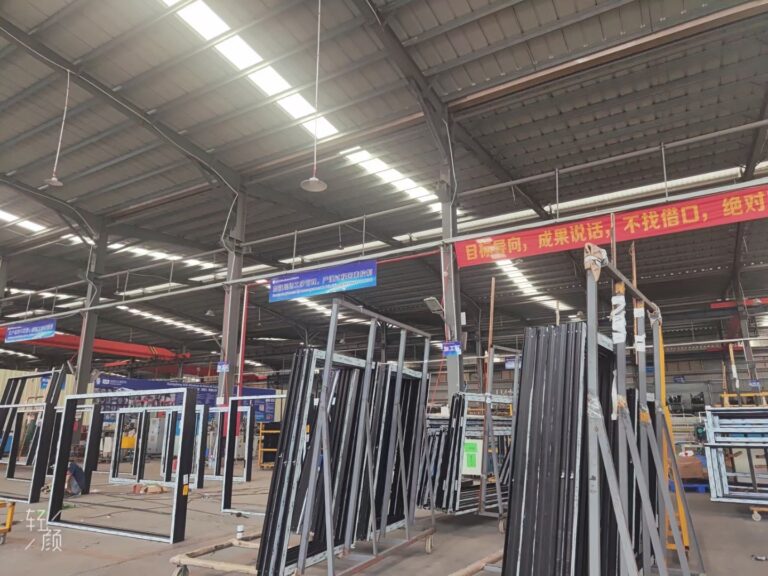
Meichen describes itself as dedicated to the ANZ market since 2017, with 18 to 19 years of industry expertise and a 20,000 square metre advanced manufacturing facility. Its supply chain is aligned to the two markets: aluminium from AAG, described as China’s largest production base with 37 years of experience; glass from CSG (China Southern Glass), with 42 years of experience and automated lines; and hardware described as specialised ANZ hardware with more than 10 years of experience against Australian and New Zealand requirements. The factory is in Zhaoqing, Guangdong, China, with local partnerships in Sydney, and its website is mcwindow.com.au. Its target audience spans residential luxury villas, townhouses and high-end apartments, and commercial high-rise offices, retail complexes and public buildings such as hospitals and schools. For a coastal project, the two facts that matter most from this profile are the ANZ-specific hardware experience and the certified scope across both the Australian and New Zealand standards sets: they are the reasons the selection can be verified rather than assumed.
Frequently Asked Questions
Is salt exposure the same at every coastal site?
No. Distance from the open water, prevailing wind direction, topography, elevation and facade orientation all change the deposition and the weathering. Salt exposure in this article is treated as project-specific: it is assessed for the particular site, written into the project specification, and matched to the product configuration through the manufacturer’s documented performance for that configuration. There is no universal coastal rating that substitutes for that assessment.
How do I know if a window specification is adequate for my coastal site?
Check the chain. The finish system is named and documented for the configuration. The drainage detail is specified and the tracks are designed to drain and to be cleaned. The seals and the sash hardware are detailed together so compression is even and maintained. The junction is detailed with a named sealant and a named responsible party. The glass is to AS 1288 with safety glazing to AS 2208, or to the New Zealand equivalents. The product is to AS 2047 with tested performance to AS 4284 in Australia, or to SNZ TS 4211:2022 and SNZ 4223 in New Zealand, and the installation is to AS 4666 in Australia. If any link in that chain is missing, the specification is not yet complete for a coastal site.
Does a thermal break matter at the coast?
Yes, mainly for the condensation question. A thermal break raises the internal surface temperature of the frame and reduces interior condensation risk, which matters where coastal humidity is high. Meichen offers both families — thermal break (MC140 sliding door, MC100 series, MA73 bi-fold) and non-thermal-break (MD150 series, ApexAwning 100/150-AS960) — and the choice is driven by the thermal brief, the condensation assessment and the budget. The weathering side of the coastal brief is addressed by both families through the same detailing and maintenance discipline.
Which Meichen product families are most relevant to coastal projects?
The ultra slim frame systems carry the coastal naming — the Ultra Slim Coastal SD205-AS960 sliding and stacker doors and the SLMA100-20 slim sliding window — and the thermal break and non-thermal-break families are the options for the frame construction decision. The curtain wall BA150 series, louvres, balustrades and shower enclosures cover the specialised applications. The model designations are product names, not performance claims; the certification record and the test data for the exact configuration are what make the selection verifiable.
How often should coastal windows be inspected?
At intervals matched to the site exposure, with the most exposed sites inspected most often, and with a written record each time. The inspection covers the finish, the tracks, the seals, the junction sealant, the hardware adjustment, the drainage path and the glass edges. The purpose is to catch salt crust, sealant ageing, seal compression loss and drainage blockage at the first visible stage, when they are cheap to correct, rather than at the final stage, when they are expensive.
Does the documented water-tightness figure mean the window will never leak on site?
No. The up-to-960 Pa figure under AS 4284 is a laboratory test result for defined configurations. On site, the actual exposure, the installation quality, the interface detail and the maintenance regime all determine the real behaviour. The figure is evidence that the sealing systems are engineered and tested to a measurable standard; it is not a warranty of perpetual dryness, and it should be read in that spirit.
Can the same aluminium window specification be used inland and at the coast?
Not without changes. The inland specification can assume lower salt deposition, shorter wet periods and lower wind-driven rain intensity. The coastal specification must assume the opposite on all three, and it must carry the site-specific exposure assessment, the finish confirmation, the drainage and track detail, the junction detail and the maintenance regime that this article describes. Using the inland specification at the coast is the most common coastal failure, and it is entirely avoidable at the specification stage.
Which standards should I ask the manufacturer about?
In Australia: AS 2047 for the product, AS 4284 for the tested performance, AS 1288 for the glass, AS 2208 for safety glazing and AS 4666 for the installation, read together with the NCC (ABCB) framework. In New Zealand: SNZ TS 4211:2022 and SNZ 4223, read together with the New Zealand building code context. In both cases, ask for the test reports that underpin the certifications and confirm that the report matches the exact configuration being specified.
Conclusion
A coastal aluminium window is a systems problem, not a product sticker. Salt, water and wind attack four things in turn — the finish, the seals, the drainage and the interface — and the specification must address all four: assess the salt exposure for the particular site rather than assuming a universal coastal rating; specify the finish system for the exact configuration and confirm it in documentation; detail the drainage and the track so captured water has a defined, cleanable escape route; detail the junction so the factory product and the building stay continuous; select the glass to AS 1288 with safety glazing to AS 2208; choose the thermal break or non-thermal-break family against the thermal brief and the condensation assessment; install to AS 4666 so the laboratory figure transfers to the building; and maintain on a schedule matched to the exposure, with a written record. For projects in Australia and New Zealand, the regulatory frame — the NCC/ABCB in Australia, the SNZ standards in New Zealand — and the manufacturer’s certification record, such as Meichen’s 43 Australian series and 13 New Zealand lines under the standards sets named in this article, are the reference points that make the selection verifiable. Used that way, the specification is defensible, the performance is maintainable, and the long-term service of the window is earned by the whole system — not claimed by a number on a brochure. No salt-spray data, no coating lifetimes, no U-values, no decibel values and no project-specific ratings are claimed in this article, and none should be assumed until the relevant test data has been matched to the exact configuration that is installed.
Copyright © 2026 添先生. All rights reserved.
Related Articles
Aluminium Windows and Doors Source Manufacturing Factories: Your Best Choice for Exports to Australia and New Zealand
In the global construction industry, aluminum windows and doors are favored for their durability, low…
Complete Aluminium Window and Door Solutions from MEICHEN Windows & Doors
Complete Aluminium Window and Door Solutions Choosing a single supplier for all window and door…

Heritage Home Renovation Mistakes to Avoid: A Complete Guide for Australian Homeowners
Renovating a heritage home is an exciting opportunity to preserve Australia’s architectural history while creating…