Integrating Smart Technology: The Next Generation of Automated Window Systems in Australia
MC
Author
2026-09-23
Published
8 min read
Reading time
The way Australians think about their windows is changing fast. No longer just a passive boundary between indoors and out, windows are becoming active, connected components of the modern home. In smart home window automation Australia 2026 discussions, one theme dominates: homeowners want windows that anticipate their needs — opening at dawn, sealing against an incoming storm, locking automatically at night, and reporting their energy performance in real time. This article explains how that technology works, what Australian buyers should look for, and how high-performance window systems such as those from Meichen International Windows & Doors (MC Windows) are positioned to lead the next generation of automated fenestration in Australia.
Why Smart Windows Are Defining 2026 in Australia
Australia presents one of the most demanding environments in the world for building envelopes. Coastal salt air, extreme UV exposure, monsoonal rainfall, summer temperatures above 40°C, and winter heating loads in the southern states all push window systems to their limits. At the same time, energy costs continue to climb, and both state and federal building policy places increasing weight on thermal performance and energy efficiency.
Two forces are colliding to make 2026 a breakout year for window automation:
- Maturing smart-home ecosystems. Platforms that once controlled only lights and thermostats now treat the building envelope as first-class citizens. Window actuators, position sensors, and weather stations are native to the same home hub as your blinds, heating, and security systems.
- Higher-performance window hardware. Automation is only as good as the hardware it drives. Ultra-slim, thermally broken aluminium systems with certified water and air tightness can handle repeated automated cycling without degradation — a capability that traditional windows simply do not offer.
The result is a market where a smart window is not a gimmick bolted onto a standard frame, but an engineered system designed from the aluminium extrusion up to be automated, monitored, and integrated.
How Smart Home Window Automation Australia 2026 Is Evolving
Smart window technology in 2026 is no longer about a single remote-controlled awning window. It is about coordinated, sensor-driven behaviour across an entire facade. Three capability layers define the current generation.
Sensor-Driven Scheduling and Weather Response
The most valuable automation happens invisibly. Modern window controllers combine:
- Position and limit sensors on the sash or operator, giving the hub precise knowledge of whether a window is closed, latched, or ajar.
- Environmental sensors — temperature, humidity, CO₂, and VOC readings indoors, plus outdoor anemometers and rain sensors.
- Solar positioning data to pre-open or pre-shade windows before peak heat arrives, rather than reacting after the room has already warmed up.
With these inputs, a 2026-era system can execute sequences such as: open all north-facing windows at 6:30 am for cross-ventilation, close and latch them when the rain sensor detects precipitation, and cycle fresh air during unoccupied hours to reduce indoor humidity. For a home with thermal break glazing and low-E double or triple glass, each automated cycle has a directly measurable impact on heating and cooling energy use.
App, Voice, and Whole-Home Integration
Owner experience has matured dramatically. Windows are now exposed in the same app dashboards as lighting and climate zones, and they respond to voice commands on the major assistant platforms. More importantly, they participate in scenes and routines:
- “Good morning” routine — tilt and turn windows open 15° in the bedroom, blinds half-lower, heating steps down.
- “Away” mode — all windows verified closed and latched, opening attempts trigger an alert to the owner’s phone.
- “Party” mode — stacker doors and sliding systems fully open to the deck, interior zoning adjusts.
The standard for integration in 2026 is openness: Matter-compatible controllers and documented APIs mean the window system works with the hub the home already uses, rather than locking the owner into a single vendor’s ecosystem.
Security and Access Control
Automated windows have a major advantage over manual ones: verifiable state. A traditional door lock can be picked; a motorised window latch whose position is continuously confirmed by a sensor gives a security system hard evidence, not assumption. Combined with automated latching at night, tamper alerts on unauthorised opening, and geofence-triggered verification before the owner leaves home, smart windows become one of the most reliable elements of a perimeter security strategy.
What Australian Owners Must Check Before Upgrading
Compliance with Australian Standards
This is the point where many overseas-sourced automation systems fail. In Australia, windows and doors are assessed under a strict standards regime. When evaluating any window system for automated use, verify compliance with:
- AS 2047 — Windows and doors for buildings (performance requirements including strength and water penetration).
- AS 4284 — Performance of windows (the framework for thermal, acoustic, and water-tightness testing).
- AS 1288 — Glazing in buildings, and AS 2208 for safety glazing in relevant locations.
- AS 4666 — Installation of windows and doors.
For cross-border projects, New Zealand compliance (SNZ TS 4211:2022 and SNZ 4223) is the parallel consideration. Buyers should ask for certified test reports for the exact product series they are installing — not a parent company’s general accreditation — and, where the project is in New Zealand, confirmation that the specific line is certified for that market.
Energy Performance
Automation multiplies the value of good glass, but it cannot compensate for poor glass. Look for:
- Thermal break aluminium profiles that isolate the interior face of the frame from the exterior face, dramatically reducing conduction losses.
- Double or triple glazing with low-E coatings, matched to the local climate zone.
- Documented air-tightness performance, since unsealed frames defeat both the automation’s ventilation logic and the home’s energy envelope.
A certified, air-tight automated window that runs a sensible ventilation schedule typically outperforms an unsealed “smart” retrofit on every metric that matters: comfort, energy use, and acoustic insulation.
Durability for Australian Conditions
Automated cycling is a mechanical stress. A window that opens and closes hundreds of times a year must hold its water tightness, its operator torque, and its seal integrity across decades of UV and salt exposure. Two questions separate premium systems from the rest:
- How is the water tightness rating demonstrated? Top-tier systems are tested to extreme values — for example, 960 Pa water penetration under AS 4284 — which gives a large safety margin for storm conditions in coastal regions.
- Where does the hardware come from? Motorised hardware that has been developed specifically for Australian and New Zealand duty cycles (heat, humidity, salt air) will outlive generic imported actuators. Supply chain depth also matters: manufacturers with in-house or partner access to major aluminium and glass producers can control quality from raw extrusion to finished unit, rather than assembling from third-party components of unknown provenance.
The MC Windows Approach: High-Performance Hardware Ready for Automation
Meichen International Windows & Doors (MC Windows) has spent 18–19 years engineering aluminium window and door systems, and has been dedicated to the Australian and New Zealand market since 2017. That focus shows up in the way the range is structured — a portfolio built in a 20,000 sq.m manufacturing facility, with 43 product series certified for Australia and 13 product lines certified for New Zealand.
A Range Built for Automated Use
Several product lines map directly to the opportunities above:
- MC100 thermal break series — awning, fixed, tilt and turn, and double hung systems. Tilt and turn is the natural automation star: it ventilates in a secure micro-open position and seals fully, making it ideal for weather-responsive schedules. Its thermal break construction supports low-E double and triple glazing for energy efficiency.
- ApexAwning 100/150-AS960 — awning systems tested to the 960 Pa water-penetration benchmark, a level that sets an industry reference point for storm resilience. Automated awning windows are among the safest ventilation points on a house because gravity assists closure.
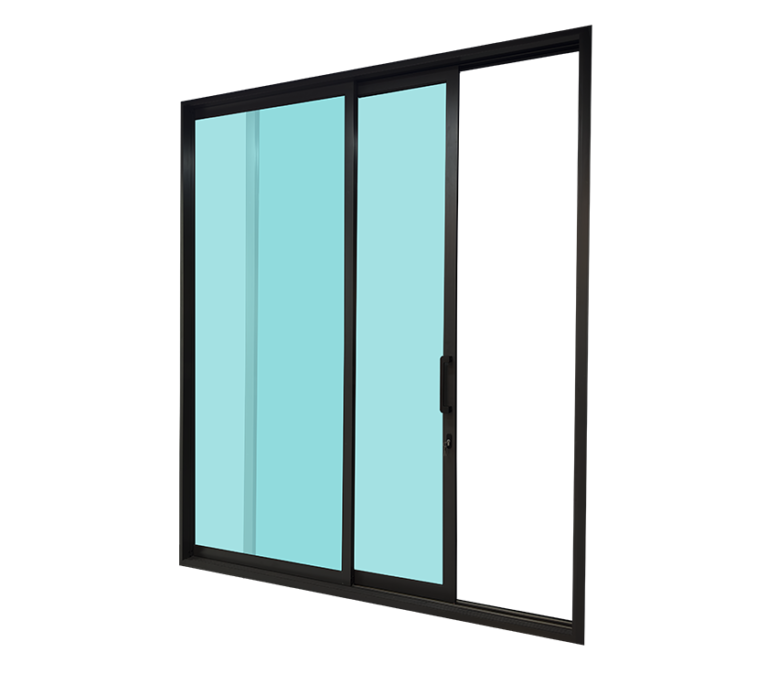
- Ultra Slim Coastal SD205-AS960 — sliding and stacker door systems for open-plan living, where full-width motorised stackers transform a living room and deck into one continuous space. The “coastal” designation signals hardware developed for salt-air environments.
- SLMA100-20 slim sliding window — a slim-profile option where automation is paired with unobstructed views.
- MA73 bi-fold door (no-mullion configuration) and the MC140 sliding door for high-performance openings, and the MD150 series and BA150 curtain wall for commercial and high-rise applications where automated latching and monitoring scale across hundreds of bays.
Certifications and Supply Chain That Back the Automation
Automation promises only work when the underlying hardware is certified and durable. MC Windows’ systems carry Australian certification under AS 2047, AS 4284, AS 1288, AS 4666, and AS 2208, alongside New Zealand certification to SNZ TS 4211:2022 and SNZ 4223, with CodeMark certification — the highest level in Australia — actively being pursued. Independent international testing (BV, CSI, NATA, AZUMA, INTERTEK) provides a verification trail that specifiers can rely on.
Equally important is the supply chain: aluminium from AAG, China’s largest production base with 37 years of experience; glass from China Southern Glass (CSG), with 42 years of manufacturing history and fully automated production lines; and specialised ANZ hardware developed over 10+ years specifically for Australian and New Zealand requirements. For anyone planning automated windows in 2026, that depth of supply chain is what stands behind the decade-plus service life the hardware is expected to deliver. With local partnerships in Sydney, MC Windows also bridges the gap between factory-direct manufacturing and on-ground Australian support, via mcwindow.com.au.
Planning Your Automation Project: A Practical Sequence
Owners and builders should sequence a smart window project in five steps:
- Audit the envelope first. Decide on the window system, glazing, and thermal performance target before selecting any electronics. The frame determines what automation is mechanically feasible.
- Pick the automation architecture. Choose a hub and controller protocol that the household will still support in five years. Prioritise open standards and verified state reporting (latched/unlatched, not just open/closed).
- Map scenes to real routines. Ventilation schedules, away-mode verification, and storm response should reflect how the household actually lives — morning routines, occupancy patterns, and the local climate.
- Specify the hardware for cycling. Confirm the window series’ certified performance (water, air, wind load) and the duty rating of the operators for automated use in your climate zone.
- Commission with telemetry. A well-installed system reports energy and air-exchange data over time, so the owner can prove the payback of automation against energy bills.
The Cost and Payback Reality of Automated Windows
A fair question from any owner: what does smart window automation actually cost, and does it pay back? The honest answer for 2026 is that the case is strongest where automation replaces active behaviour, not where it replaces a manual window. The payback levers are: reduced heating and cooling load through scheduled ventilation (typically the largest single saving, especially in mixed climate zones), reduced cooling demand from pre-emptive solar management, lower water and energy use from humidity-aware operation, and avoided costs from storm-related intrusion and water penetration damage — a risk that falls sharply when certified 960 Pa water-tight systems close and latch automatically. For new builds and major renovations, the marginal cost of specifying automation-ready windows is small relative to the frame itself, because the structural and sealing performance is already there. For retrofit, the calculation only works when the window system is upgraded at the same time. In short: treat automation as the finishing layer on a high-performance envelope, never as a substitute for one.
The Road Ahead: Where Australian Window Automation Is Heading
Beyond 2026, three directions look certain. First, AI-assisted scheduling: controllers that learn a household’s comfort preferences and local weather patterns, then optimise window cycling autonomously rather than following fixed timetables. Second, deeper integration with heat pumps and EV chargers, where window position becomes a variable in the home’s energy optimisation alongside battery and thermal load. Third, commercial-scale automation, where curtain wall and large commercial facade systems — like the BA150 series — adopt the same sensor and actuator discipline as residential homes, delivering measurable energy savings across entire buildings.
None of this works without certified, high-performance hardware underneath. The winning combination in 2026 is clear: thermally broken, ultra-slim, AS-tested aluminium systems with salt-air-grade hardware, paired with open, sensor-rich automation that reports hard state data.
Conclusion
Smart home window automation Australia 2026 is no longer a speculative idea — it is a practical upgrade path for homeowners and a specification reality for developers. The technology delivers measurable wins in energy use, security, and comfort, provided the window hardware is engineered for it: certified to Australian standards, water-tight to benchmark levels such as 960 Pa, thermally broken, and built by manufacturers with genuine Australian and New Zealand market experience. For buyers ready to take the next step, a 2026 automated window is best understood not as a gadget, but as a high-performance building envelope that happens to think — and systems from MC Windows are built precisely for that role.
For product details, certifications, and Australian partnership enquiries, visit mcwindow.com.au.
© 添先生 | Meichen International Windows & Doors (MC Windows). All rights reserved. This article was generated with AI assistance and reviewed for factual accuracy against MC Windows’ certified product and standards documentation.
Related Articles

Why AS2047-Certified Slimline Windows and Doors Are Loved by Modern Architecture in Sydney, Australia
In Sydney’s contemporary architecture, slimline windows and doors have become a signature of luxury homes…
Aluminium Sliding Door Sydney: Sleek, Space-saving, and Durable Aluminium Doors for Your Home
The aluminium frame offers strength and resilience, able to withstand the weather extremes of Sydney,…
Aged-Care and Healthcare Facility Windows in Australia: Design, Safety and Compliance Standards
Explore window design requirements for Australian aged-care and healthcare facilities. Learn about infection control, fall…