Coastal Living: Choosing Corrosion-Resistant Windows for Beachfront Properties
MC
Author
2026-09-18
Published
13 min read
Reading time
Few building environments are as demanding — or as beautiful — as the Australian coastline. Salt-laden winds, persistent humidity, intense ultraviolet exposure, and episodic storm surges subject a home’s window system to a relentless cycle of attack that inland properties simply do not experience. For owners, architects, and developers of beachfront villas, coastal apartments, and resort projects, the window is no longer a design afterthought: it is the first line of defence between the house and the sea.
Choosing corrosion-resistant windows for beachfront properties requires understanding how chloride attack works at every level of the system — frame coating, hardware, seals, and glazing — and verifying that performance claims are backed by Australian standards testing rather than marketing language. It also requires reconciling engineering robustness with the clean, uncluttered aesthetics that define contemporary Australian coastal architecture. This guide explains what to look for, how Australian standards verify coastal performance, and where the minimalist window design Australia movement is taking the industry — with practical specification and maintenance advice you can apply from the Gold Coast to the Mornington Peninsula.
Why the Coast Is the Harshest Environment for Windows
Within a few kilometres of the shoreline, airborne chloride concentrations rise sharply. These microscopic salt particles settle on every external surface — and they work against aluminium in three ways at once:
- They attack protective coatings. Wherever a powder coat or anodised layer is scratched, chipped, or otherwise compromised, chloride ions penetrate to the substrate and accelerate localised pitting.
- They corrode fasteners and hardware. Ordinary carbon-steel or lower-grade stainless screws rust, swell, and can bind mechanisms, jam sashes, and transfer surface staining to glass and frame.
- They degrade seals and gaskets. Prolonged UV exposure combined with heat and moisture causes rubber seals to harden, shrink, and crack — the very components that keep storm-driven rain out of the frame cavity.
Add to this the coastal-specific load case: higher wind pressures on exposed elevations, saltwater splash during king tides and storm surges, and constant moisture that can drive condensation and mould growth inside cavities if a system is not properly drained. The financial consequence of specifying the wrong window is severe — water ingress damage, accelerated profile corrosion, voided warranties, and costly early replacement of a product that should serve a home for decades.
What “Corrosion-Resistant” Should Actually Mean in an Aluminium Window
Aluminium forms a naturally protective oxide layer, which is why it remains the dominant structural material for coastal fenestration. But “aluminium” is only half the story. A genuinely coastal-grade window is specified and manufactured so that every component — not just the main profile — resists chloride attack.
Frame Coatings and Pre-treatment
The finish system is the first barrier. Best practice for coastal applications includes a high-chip-resistance pre-treatment (modern chromate-free processes), a durable PVDF-based powder coat rated for long-term UV and salt exposure, and — for visible mullions and sash faces — anodised options that provide a hard, integral finish rather than a surface-applied film. Coating thickness and adhesion specifications matter as much as the colour itself, because a beautiful finish that does not chip or delaminate is what actually survives the shoreline.
Hardware and Fixings
Locks, hinges, rollers, screws, and hidden fixings should be marine-grade 316 stainless steel or powder-coated for coastal duty. Hardware is where many “coastal” windows quietly fail, because it is the component manufacturers pay the least attention to. Ask for the hardware grade in writing, and confirm that internal mechanisms — not just visible screws — are protected.
Seals, Gaskets, and Drainage
EPDM or TPE weather seals resist UV and ozone degradation, and a well-engineered frame provides weep paths that flush salt-laden water out of the cavity rather than trapping it against internal components. Multi-point locking systems distribute clamping force evenly around the sash perimeter, protecting the seal under the sustained wind loads that are typical of exposed sites.
Glazing and Spacer Systems
Insulated glass units for coastal homes should use stainless steel or “warm-edge” spacer bars and avoid exposed base metals at the edge seal, where saltwater can accumulate. Laminated or toughened safety glass — in line with AS 1288 and AS 2208 — also protects occupants against impact and storm debris, which becomes an increasing consideration as weather events intensify.
Australian Coastal Markets: Where Specification Matters Most
Australia’s coastline is not one environment, but several. The exposed east-coast surf beaches of the Gold Coast, Sunshine Coast, and Byron Bay experience direct salt spray from a westerly and southwesterly sea. Melbourne’s bays and peninsulas bring cooler, wetter, more persistent moisture. Adelaide’s Fleurieu coast and Perth’s western shorelines combine salt exposure with intense UV and drying winds. Each of these contexts changes the balance between corrosion resistance, thermal performance, and acoustic insulation that a window must deliver. A specification that works perfectly on a sheltered riverfront may underperform on an open headland site — which is why wind load class, coating system, and drainage design should be engineered for the specific exposure category of your site, not borrowed from a generic catalogue.
Australian Standards: How Coastal Performance Is Verified
Performance claims are only as strong as the test reports behind them. In Australia, window systems are assessed against a family of standards that together cover geometry, safety, installation, and performance:
- AS 2047 — Windows and doors: covers product design and structural performance.
- AS 4284 — Performance of windows and external doors: defines wind load, water tightness, air tightness, and acoustic performance classes.
- AS 1288 and AS 2208 — Glass and safety glazing in buildings: govern glazing type, sizing, and placement for occupant safety.
- AS 4666 — Installation of windows and doors in and on buildings: the specification for correct on-site installation — which is what ultimately protects the warranty.
- AS 3715 — Test methods for corrosion resistance of building products near the coast: the reference test regime for coastal exposure of building components.
When evaluating a manufacturer, ask for third-party test data from NATA-accredited laboratories covering water tightness, air tightness, wind load resistance, and acoustic insulation. Industry-leading systems now demonstrate water tightness of up to 960 Pa under AS 4284 — a level that comfortably exceeds the requirements of most residential coastal sites and suits exposed multi-residential projects. For cross-Tasman projects, the New Zealand equivalents are covered by SNZ TS 4211:2022 and SNZ 4223. CodeMark certification remains the highest product recognition in the Australian market, and manufacturers actively pursuing it signal a long-term commitment to local compliance rather than a one-off export catalogue.
Minimalist Window Design Australia: Slim Frames That Can Survive the Salt
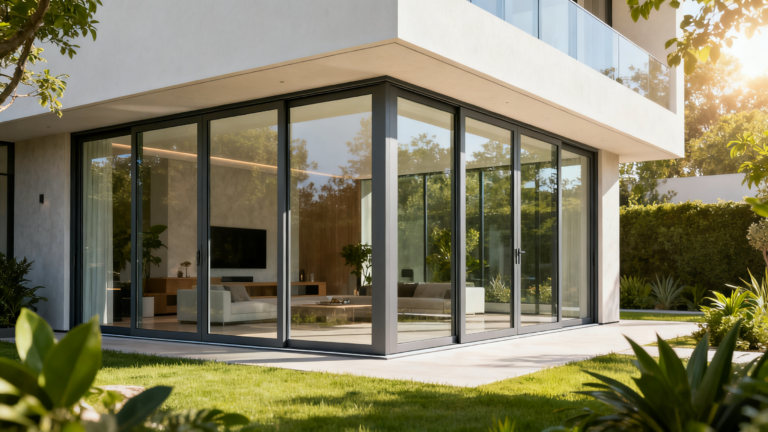
This is where aesthetics meets engineering. The minimalist window design Australia approach has become the defining style of contemporary coastal architecture: ultra-slim aluminium profiles, full-height glazing, and floor-to-ceiling stacker or sliding doors that visually erase the boundary between the home and the beach. The historical objection — that slim frames lack the structural depth to carry coastal loads — has been addressed by modern engineered profiles that concentrate strength where it is needed, combining high-strength alloys, optimised internal reinforcement, and multi-point locking.
The result is a system such as MC Windows’ Ultra Slim Coastal SD205-AS960 sliding and stacker door range, which is purpose-named for coastal duty and tested to the 960 Pa water-tightness benchmark. The SLMA100-20 slim sliding window applies the same logic to window applications: a narrow visible sightline that maximises view and daylight while carrying the wind load a beachfront elevation demands. In a market where a beachfront living room is judged by its view, minimalist window design Australia is not a style preference — it is the expected language of good coastal architecture, and corrosion resistance is what makes that language durable rather than merely cosmetic.
For those who want to see the full aesthetic family, MC’s Minimalist series (model MC-75A, high-end) pairs architectural 6063 aluminium with triple-glazed Low-E units and German-engineered hardware — a specification built to prove that slim sightlines and high thermal performance can coexist in one frame.
The MC Windows Coastal Range at a Glance
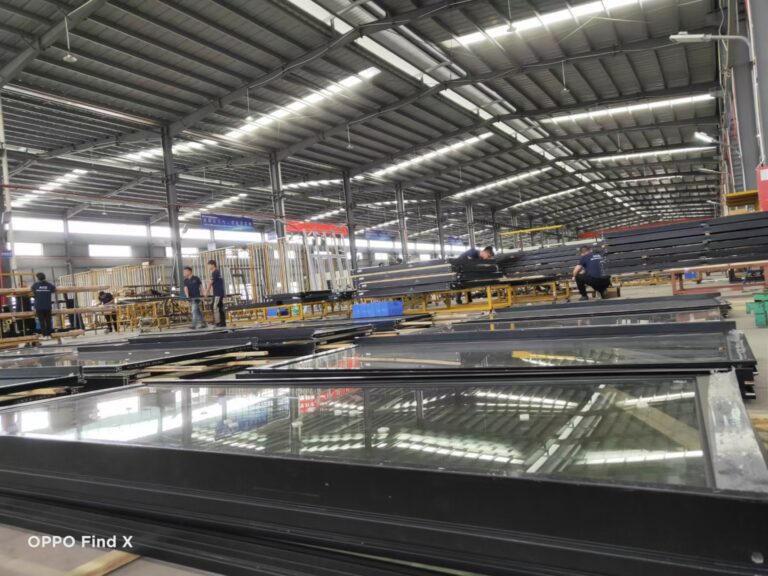
Meichen International Windows & Doors (MC Windows) has been dedicated to the Australian and New Zealand market since 2017, backed by more than 18 years of aluminium fenestration engineering and a 20,000 square metre advanced manufacturing facility. Forty-three product series are certified for the Australian market, with a further 13 lines certified for New Zealand, and the factory’s test reports cover air and water tightness (Class 8 performance), sound insulation (ISO 10140-2), thermal U-value, and fire rating (BS EN 1363-1). Key coastal-relevant systems include:
- Ultra Slim Coastal SD205-AS960 — slim sliding and stacker doors engineered for coastal projects and tested to 960 Pa water tightness.
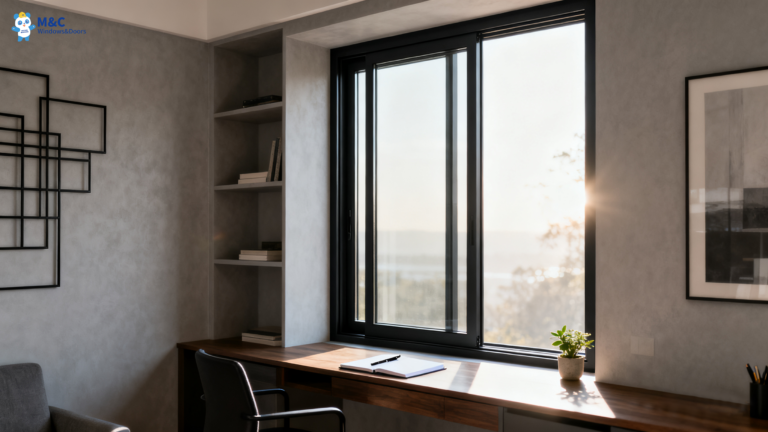
- SLMA100-20 Slim Sliding Window — narrow-sightline sliding windows for exposed residential elevations.
- MC100 thermal break series — awning, fixed, tilt & turn, and double-hung units with continuous thermal breaks for insulated coastal homes.
- MC140 Sliding Door — thermally broken sliding door for large indoor-outdoor openings.
- MA73 Bi-fold Door — mullion-free folding system for uninterrupted views and effortless outdoor access.
- ApexAwning 100/150-AS960 — high water-tightness awning windows for rain-exposed elevations.
Supply chain depth matters in coastal applications, where material consistency is the foundation of finish durability. MC sources aluminium from AAG, one of China’s largest aluminium profiles production bases with 37 years of manufacturing history, and glass from CSG, a manufacturer with 42 years of glass production experience and fully automated production lines. Hardware is selected specifically for ANZ requirements, with more than a decade of experience meeting Australian and New Zealand specifications. Independent quality oversight comes from BV, CSI, NATA, AZUMA, and INTERTEK, with ISO 9001:2015 certification underpinning the manufacturing system.
Energy Efficiency, Condensation, and Comfort in Coastal Homes
Corrosion resistance is the headline requirement for a beachfront property, but a well-chosen window also has to perform thermally. Coastal sites combine high solar gain on sun-drenched aspects with cool, moist air that drives condensation — a condition that accelerates deterioration of internal components and invites mould growth. Thermal-break profiles with double or triple Low-E glazing reduce heat transfer through the frame and glass, keeping interior glass surface temperatures closer to room temperature and significantly reducing condensation risk.
In hot climates, solar-control glazing balances daylight with heat rejection, lowering cooling loads through summer — the season when, in Australia, coastal homes are at their busiest. Acoustic performance deserves the same attention: a beachfront home is close to more than just the sea. Construction activity, boat traffic, and regional airports are common neighbours, and sound-insulation testing to ISO 10140-2 gives you an objective number to specify rather than a promise to trust.
A Practical Checklist for Beachfront Buyers and Specifiers
- Ask for the coating specification in writing: pre-treatment type, coat system, and finish standard — and confirm marine-grade 316 stainless or powder-coated hardware for all external fixings.
- Request AS 4284 test reports showing the water tightness and wind load class, and confirm the testing laboratory is NATA-accredited.
- Verify that glazing complies with AS 1288 and AS 2208 for safety, and that insulated glass spacer bars are stainless steel or warm-edge.
- Confirm the frame’s drainage and weep design — saltwater should leave the cavity, not sit in it.
- Check seal materials (EPDM or TPE) and the multi-point locking configuration for exposed elevations.
- For large openings, confirm the wind load class is calculated for the site’s coastal exposure category, not an inland default.
- Insist on AS 4666-compliant installation by qualified installers; even a perfect frame will underperform if it is installed poorly.
- Plan a simple maintenance routine: rinse salt accumulation after storm events, inspect seals every 12 to 24 months, and keep weep paths clear.
Frequently Asked Questions
How long should coastal windows last before recoating?
A properly specified PVDF powder-coated or anodised aluminium system should maintain its appearance for the life of the building in a coastal setting. If a product requires recoating within a few years, the finish system was under-specified for the exposure — and that is precisely the failure mode you are buying against. Reputable manufacturers stand behind their coastal finish warranties; ask for the terms in writing before you order.
Are slim-frame windows structurally adequate for the coast?
Yes — provided the slim sightline is achieved through engineered profile geometry rather than simply thin metal. Modern ultra-slim systems combine high-strength 6063-series aluminium, optimised internal reinforcement, and multi-point locking to meet coastal wind load classes. The specification to look for is the tested wind load and water tightness class, not the visible profile width.
Is triple glazing overkill for a beachfront home?
In most Australian coastal climates, double glazing with a Low-E coating is the efficiency baseline, and triple Low-E units are justified where condensation control, acoustic separation, or thermal performance is a priority — particularly in cooler southern coastal regions and in large open-plan living spaces where the glazing area is dominant.
What documents should a manufacturer provide for a coastal project?
At minimum: AS 2047 and AS 4284 test reports from an accredited laboratory, glazing compliance under AS 1288, hardware grade documentation, coating specifications, and installation guidance aligned with AS 4666. For New Zealand projects, add SNZ TS 4211:2022 and SNZ 4223 test evidence. CodeMark certification, where available, is the strongest single signal of long-term market commitment.
Does minimalist design make maintenance harder?
If anything, the opposite. Minimalist window design Australia favours larger, simpler panes with fewer external sightlines, which reduces the total edge-seal length and the number of exposed joints per square metre of glass. Fewer joints means fewer failure points: the sleek aesthetic and the low-maintenance story naturally align.
Conclusion: Engineered to Endure, Designed to Disappear
Beachfront living rewards the owner who treats the window as engineered infrastructure — specified against Australian standards, tested in accredited laboratories, and built with a corrosion-resistance mindset at every component level. The good news is that the aesthetics and the engineering no longer have to be traded off. The minimalist window design Australia now available delivers the ultra-slim sightlines, full-height views, and effortless indoor-outdoor flow that coastal architecture is famous for — backed by water tightness tested to 960 Pa, thermal-break construction, and supply-chain depth built for durability.
MC Windows has been supplying exactly this combination to the Australian and New Zealand market since 2017, with 43 certified product series, coastal-specific systems such as the Ultra Slim Coastal SD205-AS960, and a test record covering everything from air tightness to fire rating. For your beachfront project — whether a single villa or a multi-residential development — start with the test reports, specify coatings and hardware for chloride exposure, and let the view disappear into the frame.
For coastal window specifications, product documentation, or a project consultation, visit mcwindow.com.au.
Sources
This article draws on the following source materials provided by Meichen International Windows & Doors:
- Meichen International Windows & Doors (MC Windows) knowledge base — brand, certification, and product performance data.
- MEICHEN Premium Brochure (V2, Collection 2026) — Minimalist series specifications and test report summaries.
- MEICHEN Windows & Doors Brochure — product series classification and test performance summary.
Slim Frames and Double Glazing: Aesthetics Without Compromise
A common misconception is that you must choose between a slim sightline and a high-performance glazing system. The two are actually complementary. Slimming the frame does not thin out the glass pack: a double- or triple-glazed Low-E unit sits in the same recess regardless of how narrow the visible profile is. What changes is the ratio of glass to frame around it — and that ratio is what determines how much light reaches the room.
In other words, the slim-frame aesthetic is not a budget feature; it is a premium one. It requires tighter tolerances in fabrication, more sophisticated seals and higher-grade hardware to hold a large, thin sightline rigid against wind and weather. When you see a genuinely slim frame operating smoothly for years, you are looking at engineering spending — not cost cutting.
Choosing the Right Window Style for Maximum Daylight
Daylight strategy is a design decision that starts with the function of each opening. MC Windows’ range covers the main typologies, and each plays a different role in a light-filled home:
- Fixed lights (MC100 Fixed) — the purest form of daylighting. No hardware, maximum glass, lowest cost per square metre. Ideal for feature walls, rear courtyards and above worktops.
- Slim sliding windows (SLMA100-20) — operable ventilation with a narrow sightline and a low-maintenance track; the workhorse of the modern Australian facade.
- Tilt and turn (MC100 Tilt & Turn) — European-style operation that vents through the top while the frame stays secured; excellent for bathrooms, studies and upper floors where a full opening is impractical.
- Awning and double hung (MC100 Series) — awning windows bring rain-sheltered cross-ventilation, while double hung suits traditional elevations that need a modern, efficient upgrade.
- Bi-folds (MA73, no mullion) — for living spaces, patios and pool decks where the opening must disappear when open.
- Sliding and stacker doors (MC140, Ultra Slim Coastal SD205-AS960) — the large-format indoor-outdoor connection, with thermal-break options for climate-controlled comfort.
A well-composed facade usually mixes these: a full-height fixed panel as the light engine, flanked by slim sliding panels for ventilation, and a mullion-free bi-fold or stacker door at the living edge. That combination delivers both the daylight and the airflow a healthy home needs, in the slimmest possible frame.
The Everyday Benefits of a Brighter Home
Daylight is the cheapest, most reliable form of lighting a home can have — and its benefits go further than energy bills. Studies of residential environments consistently link adequate daylight to improved mood, better sleep rhythms and a higher perceived sense of space. In practical Australian terms, the north-facing aspect receives the strongest and most consistent solar gain through the year. Double-glazed Low-E glass is engineered to work with that reality: in winter, solar heat passes through and warms the room for free; in summer, the coating keeps a large share of the heat out, so the same window that lights the space does not turn it into an oven. That seasonal balance is precisely why high-performance double glazing is the standard recommendation for Australian homeowners upgrading from single glazing.
Acoustically, the sealed double-glazed cavity is the first line of defence against road and neighbourhood noise. For a slim-frame home that opens fully onto a patio, you get the best of both regimes: wide-open and bright in the evening, then sealed and quiet when the doors are closed.
Maintenance, Durability and the Resale Case
Aluminium is the material that makes slim frames viable at all: it is strong enough to be thin, corrosion-resistant in coastal air, and far lower maintenance than timber. A quality anodised or thermoset powder finish on 6063-series architectural aluminium holds its colour and surface integrity for decades with nothing more than occasional washing. The moving parts of a well-specified system — tracks, hinges, multi-point locks — are the items worth scrutinising in any quote, because hardware quality determines whether a six-metre bi-fold still operates smoothly in year fifteen.
On the commercial side, the case is straightforward: light-filled, energy-efficient homes sell faster and at a premium. A slim-frame glazing program is one of the most visible upgrades a property can carry, and it shows in the photographs before the first open home is held.
How to Get an Accurate Quote
- Confirm the AS 4284 performance ratings (water, air and wind) for the exact series you are being quoted.
- Confirm the glazing specification in writing: pane configuration, Low-E coating, cavity fill, and AS 2208 safety glazing where required.
- Ask for the hardware brand and its suitability for ANZ conditions.
- Require installation to be priced to AS 4666, including removal, sills, flashing and any access equipment.
- Compare itemised quotes line by line — not just the totals.
- For larger projects, ask to see test reports and certification records; a manufacturer like MC Windows, with 43 certified series for Australia, should be able to produce them quickly.
Frequently Asked Questions
Are slim-frame windows as strong as conventional windows?
When engineered correctly, yes. Strength comes from the profile’s internal geometry, not its visible width. MC Windows’ slim systems are tested to up to 960PA water tightness and to the wind-load requirements of AS 4284, which includes high-rise applications. The visible narrowness is a design achievement, not a structural concession.
Do slim frames increase the cost of double glazing in Australia?
They can add to the frame cost because of the more complex internal engineering and tighter fabrication tolerances, but they do not change the glazing price itself — the glass pack is the same, and the ratio of glass to frame is simply better. Many owners treat the frame premium as part of the wider double glazing investment, justified by the light, comfort and property value gained.
How much natural light can I actually gain from a slim-frame upgrade?
It depends on the opening, but the effect is substantial wherever a heavy frame is replaced with an ultra-slim one. Every millimetre of sightline removed becomes glass, and in large openings that translates to visibly brighter rooms, deeper light penetration and a facade that reads as one continuous pane. Full-height fixed panels deliver the largest gains, followed by bi-folds and stacker doors at the living edge.
Are MC Windows products certified for Australian conditions?
Yes. Forty-three product series are certified for the Australian market against AS 2047, AS 4284, AS 1288, AS 4666 and AS 2208, and thirteen product lines are certified for New Zealand to SNZ TS 4211:2022 and SNZ 4223. The company has served the ANZ market since 2017 and is actively pursuing CodeMark certification.
What should I look for when comparing double glazing quotes?
An itemised breakdown (glass, frame, hardware, installation), written performance ratings under AS 4284, the exact glazing specification including Low-E and cavity details, ANZ-specific hardware, and AS 4666-compliant installation. A supplier that can produce test reports and certification records on request is telling you a great deal about its own quality process.
Conclusion: Light Is the Design
Slim frames are not a passing trend; they are the logical endpoint of Australian architecture’s long conversation with light. They give you more glass in the same opening, stronger weather performance with tested ratings up to 960PA, and a facade that quietly disappears behind the view. Pair them with double-glazed Low-E glass and you have a system that is as economical as it is beautiful — and when you work out the double glazed windows Australia cost against energy savings, quiet and resale value, it is one of the strongest-value upgrades a home can carry.
Whether you are planning a full glazing program for a new villa, replacing tired joinery in an established home, or simply looking for that one dramatic opening the family will live inside for years, start with the standards, itemise the quote, and judge the frame by its engineering as much as by its appearance.
MC Windows and its ANZ partners can walk you through the full range — from the SLMA100-20 slim sliding window to the mullion-free MA73 bi-fold and the Ultra Slim Coastal SD205-AS960 stacker doors — with the test data to prove what each system will do in your climate.
Sources: Meichen International Windows & Doors (MC Windows) product documentation and knowledge base, including AS 4284 performance ratings (water tightness up to 960PA); Australian Standards AS 2047, AS 4284, AS 1288, AS 4666 and AS 2208; SNZ TS 4211:2022 and SNZ 4223. Cost guidance in this article is qualitative and does not constitute a quote; prices vary by specification, location and site conditions — request an itemised quote for your project.
Tags:
Related Articles
Why Homeowners in Perth Are Choosing AS2047-Certified High-Strength, Structurally Reinforced Windows
Building a home in Perth means facing unique environmental challenges—strong coastal winds, intense UV exposure,…
Windows and Doors That Meet NZS4211 Standards — For a Safer, More Comfortable Home
In New Zealand, windows and doors are more than just architectural features — they define…
How to Choose Windows and Doors for a Whole House When Builder in Australia
When building a new home in Australia, one of the most crucial decisions you’ll make…