Aluminium Window Hardware Systems Australia: Multi-Point Locking, Hinges & Cylinders Under AS 4145
MC
Author
2026-08-28
Published
11 min read
Reading time
Hardware is the single most overlooked determinant of long-term window performance in Australian homes and commercial buildings. Even the most thermally efficient aluminium frame, the most rigorously tested double-glazed insulated glass unit, and the most carefully flashed installation can fail within five years if the hinges corrode, the locking points misalign, or the cylinder cylinder snaps under forced-entry attack. Australian Standard AS 4145, supplemented by AS 4145.2 for hinges and the security-focused AS 5039 / AS 5041 framework, exists precisely to ensure that the moving parts of a window perform at the same level as the frame and glass that surround them.
This guide explains how Australian aluminium window hardware is specified, tested and graded. It covers multi-point locking systems, friction stays, hinges, cylinders, handles, restrictors and child-safety devices, then maps the AS 4145 performance grades onto real project conditions — from a high-rise balcony in Sydney’s CBD to a cyclone-rated home in North Queensland and a heritage-listed terrace in inner Melbourne. Whether you are an architect, a builder, a security consultant or a homeowner researching replacement windows, this article gives you the technical depth and the regulatory references you need to specify hardware that will last.
1. Why Window Hardware Matters in Australian Conditions
The Stress Environment for Australian Windows
Australian windows are exposed to a uniquely aggressive combination of environmental stressors that punish hardware far harder than equivalent European or North American products:
- Coastal salt spray. Windows within 1 km of the surf line are continuously exposed to chloride-laden aerosols. Grade 304 stainless steel corrodes visibly within 12 months in this environment; only Grade 316 stainless steel, hot-dip galvanised steel, or specially coated aluminium alloys survive a 10-year design life.
- High UV index. Much of Australia receives 3,000 to 3,500 hours of sunshine per year, with UV indices of 11+ in summer. Polymer components such as nylon rollers, Acetal gears, and EPDM weatherseals must be UV-stabilised; unstabilised polymers become brittle and crack within five years.
- Thermal cycling. A west-facing window in Melbourne or Adelaide can cycle between 8 °C at night and 65 °C on the frame surface during a summer afternoon. Differential expansion between aluminium (23 × 10⁻⁶ /K) and stainless steel (17 × 10⁻⁶ /K) imposes repeated mechanical stress on every joint.
- Bushfire ember attack. In BAL-12.5 to BAL-40 zones, bushfire shutters, ember-resistant seals and metal-on-metal hardware are mandatory under AS 3959. Plastic-bodied hardware components can melt and release combustible drips.
- Forced-entry risk. Australian burglary statistics consistently show that ground-floor windows and accessible sliding doors are the second most common entry point after the front door. Hardware security grading is therefore a genuine safety specification, not a marketing line item.
A window hardware system that is “perfectly adequate in Frankfurt or Vancouver” can fail within five years in Brisbane or Sydney if it has not been designed specifically for these conditions.
The Cost of Cheap Hardware
Industry estimates suggest that hardware represents only 3 to 8 per cent of the total installed cost of an aluminium window, yet it accounts for more than 60 per cent of all warranty callbacks. Common failure modes include:
- Friction stays that no longer hold a window open against wind load, allowing the sash to slam shut on a child’s fingers.
- Espagnolette gears that strip after 18 months because the cast-zinc alloy body was specified in place of die-cast aluminium or stainless steel.
- Cylinders that snap under pry-bar attack because the cam was retained by a single shear screw rather than a multi-tongue mechanism.
- Hinge pivots that sag, leaving the sash edge 4 mm below level and breaking the weatherseal contact line.
Specifying hardware to AS 4145 is the most cost-effective way to avoid these failure modes.
2. Australian Standards Framework for Window Hardware
AS 4145 — The Core Standard
AS 4145:2016 – Domestic and commercial hardware – Hardware for doors and windows is the umbrella standard for almost every piece of metalwork that touches a residential or light-commercial door or window in Australia. It is structured as a four-part suite:
- AS 4145.1 – Glossary of terms
- AS 4145.2 – Hinges (door and window)
- AS 4145.3 – Locks (mechanical and electromechanical)
- AS 4145.4 – Miscellaneous hardware (sliding-door locks, restrictors, letterbox plates, weatherstrips)
AS 4145.3 is the document that drives the most hardware specification decisions for windows. It establishes a six-grade classification matrix based on three performance dimensions:
| Performance dimension | Grade 1 (lowest) | Grade 6 (highest) |
|---|---|---|
| Cycles (endurance) | 25,000 cycles | 200,000 cycles |
| Operational strength | Light domestic | Heavy commercial / public use |
| Security resistance | Casual attack | Determined forced-entry attack |
For a typical Australian residential window, the industry baseline is Grade 3 or Grade 4. Commercial applications such as ground-floor office windows or apartment entry windows should specify Grade 5 or Grade 6 hardware, with electro-mechanical locking where access control is required.
AS 5039 / AS 5041 — Security Screen Hardware
Where a window is fitted with a security screen, the screen itself must be tested and certified under AS 5039 – Security screen doors and security window grilles, and the installation must comply with AS 5041 – Methods of test – Security screen doors and window grilles. These standards test the complete assembly against dynamic impact (a 40 kg pendulum swung five times), knife shear attack, and prying attack. Hardware that passes AS 5039 must be supplied as part of a tested screen system — individual hardware items cannot be “AS 5039 rated” in isolation.
AS 1428.1 — Accessibility Hardware
For windows and doors in Class 1a sole-occupancy dwellings that must comply with the Livable Housing Design Standard (referenced in the National Construction Code from 2024), hardware must meet the dexterity and reach requirements of AS 1428.1 — Design for access and mobility. In practice this means lever handles rather than knob handles on all accessible windows, and operating forces that do not exceed 22.5 N for single-hand operation.
AS 1926.1 — Pool Area Hardware
Windows and doors forming part of the pool barrier must satisfy AS 1926.1 – Swimming pool safety. Self-closing devices, latch height minimums (1,500 mm above floor), and child-resistant release mechanisms are the principal hardware implications. Hardware designed for the pool barrier is usually a higher-grade subset of standard window or door hardware, but with a separate certification.
3. Multi-Point Locking Systems
What Is Multi-Point Locking?
A multi-point lock (MPL) is a window or door locking system in which a single handle action — usually a 90-degree rotation of the espagnolette handle — engages two or more locking points along the height of the opening side of the sash or door panel. Common configurations are:
- 2-point lock – one lock at the handle height plus one at the top or bottom of the sash. Common on awning and hopper windows.
- 3-point lock – handle lock plus top and bottom shoot bolts. The minimum recommended for any window over 1,200 mm tall.
- 5-point lock – typical for hinged doors and large casement windows: handle lock, top shoot bolt, bottom shoot bolt, plus two intermediate mushroom or hook cams at quarter points.
- 7-point lock – high-security commercial or apartment applications: handle lock, two top shoot bolts, two bottom shoot bolts, plus intermediate cams on both sides.
Why Multi-Point Locking Matters
The reason multi-point locking has become the default specification for Australian aluminium windows since the early 2000s is that it distributes the sealing pressure evenly along the entire perimeter of the opening. Three consequences follow:
- Better weatherseal performance. When the sash is locked, the EPDM or silicone gasket is compressed uniformly along the full perimeter. AS 2047 water-penetration tests are passed more consistently because there is no “soft” section of the seal line.
- Improved acoustic performance. A multi-point locked window reduces air infiltration by up to 80 per cent compared with a single-point crescent lock, which in turn raises the weighted sound reduction index (Rw) by 2 to 4 dB.
- Higher forced-entry resistance. A determined attacker applying a screwdriver to a single-point lock can defeat it in under 60 seconds. Multi-point locking raises that attack time to between 5 and 15 minutes — the practical threshold at which most burglars abandon the attempt.
How to Specify Multi-Point Hardware
Specify by the AS 4145.3 grade for cycles, strength and security, then confirm the hardware manufacturer supplies a tested combination for the chosen aluminium profile system. Most aluminium extrusion systems (MC100, MC140, Apex, Commercial 50, etc.) have “preferred hardware partner” documentation that lists which multi-point locks have been cycle-tested with the profile. Use these documents to avoid the warranty implications of mixing incompatible lock gearboxes with profile-specific keeps and cams.
4. Friction Stays and Hinges
Friction Stays for Awning and Casement Windows
A friction stay is a four-bar linkage that holds an awning or casement sash open at a chosen angle against wind load. Quality friction stays are tested to AS 4145.2 for hinge performance and to a separate cyclic endurance test that typically exceeds 25,000 open/close cycles.
The two critical specifications when ordering friction stays are:
- Stay arm length — must suit the sash weight and the opening angle. A sash that is 1,200 mm wide × 1,500 mm tall and weighs 28 kg will require a 350 mm or 400 mm stay with a working load of at least 35 kg per pair.
- Track material — Grade 304 stainless steel is the residential default in most climate zones; Grade 316 stainless is mandatory within 1 km of the coast. Black-painted mild steel stays are unsuitable for any Australian application.
Premium friction stays incorporate a friction adjuster that allows the friction to be tuned at the time of installation and re-tuned seasonally as the seals compress. Cheap friction stays have a fixed friction setting that cannot be adjusted; if it is wrong at installation, the window either slams shut or fails to stay open.
Butt Hinges for Casement Windows
Butt hinges remain the standard for casement windows where the sash width is greater than 800 mm or the sash weight exceeds 40 kg. Specify AS 4145.2 Grade 3 or higher for residential, Grade 5 or higher for commercial. Stainless steel Grade 316 is recommended for coastal and BAL-12.5+ zones.
Hinge count is determined by sash weight: a sash up to 30 kg requires two hinges; 30–50 kg requires three; 50–80 kg requires four or heavy-duty friction stays. Under-specing hinges is the single most common cause of sash sag in Australian casement windows.
Sliding Door Rollers
Sliding door hardware is a separate category covered by AS 4145.4 and by the sliding-door provisions of AS 2047. A sliding door roller assembly typically consists of:
- Two tandem rollers, each rated for 80–120 kg load
- A stainless steel or aluminium track
- An interlock or hook-bolt locking system tested to AS 4145.3
- Optional anti-lift blocks to prevent the panel being lifted out of the track from outside
For large sliding doors (3 m × 2.7 m or larger), specify heavy-duty roller assemblies rated for at least 200 kg per panel and confirm with the manufacturer that the profile system is rated for that span.
5. Cylinders and Keyed Security Hardware
Cylinder Security Grades
Window and door cylinders in Australia are commonly graded under the Australian Lock Standard (AS 4145.3) in conjunction with the Building Code of Australia (BCA) referenced standards. The relevant classification that builders and security consultants most often see is the four-star (★) to six-star (★★★★★★) security rating developed by the Australasian Lock and Hardware Institute (LHIA):
| Star rating | Typical application | Attack resistance |
|---|---|---|
| ★ (1-star) | Internal doors only | 30 seconds casual |
| ★★ (2-star) | Internal / low-risk | 1 minute casual |
| ★★★ (3-star) | Standard residential | 3 minutes casual |
| ★★★★ (4-star) | Security entrance | 5 minutes determined |
| ★★★★★ (5-star) | High-security residential | 10 minutes determined |
| ★★★★★★ (6-star) | Commercial / banking | 15+ minutes determined |
For accessible ground-floor windows and doors, a minimum of ★★★ is recommended. For ground-floor apartment entry doors and accessible commercial windows, ★★★★ or higher is appropriate.
Cylinder Construction
Cylinders that meet higher star ratings share common construction features:
- Hardened-steel anti-drill pins or discs in the cylinder body
- Anti-pick pin configurations that exceed six pins
- Shear-line protection so that a snapped cylinder does not release the cam
- Bump-resistant pin profiles (most modern cylinders are bump-resistant by default)
- Key control — restricted key profiles that cannot be copied without authorisation
Many premium cylinders also offer a removable or rekeyable core, allowing the lock to be re-keyed without removing the cylinder from the door.
Window Handle-Operated Cylinders
Most casement and awning window handles in Australia incorporate a small cylinder or “clutch” inside the handle body. This cylinder is not the same as a door cylinder and is typically rated for the window-specific security grade under AS 4145.3. When specifying, treat the handle and the cylinder as a matched set — do not mix a Grade 3 handle with a Grade 5 cylinder.
6. Restrictors, Stays and Child Safety
NCC Volume Two Part 3.9.1 — Protection of Openable Windows
The National Construction Code requires that openable windows in bedrooms of Class 1 buildings (houses) be fitted with a device that restricts the window opening to no more than 125 mm, or that the window be fitted with a child-resistant release mechanism that complies with AS 1926.1. This applies to all windows where the floor below the window opening is more than 2 m above the outside ground level.
The two main compliant hardware options are:
- Window restrictor stays — friction stays with a built-in opening limiter that can be released with a key or by an adult applying deliberate force.
- Cable or chain restrictors — secondary devices attached to the frame and sash that physically prevent the sash opening beyond 100–125 mm.
Restrictor Grades
Restrictors should be rated to AS 4145.4 and tested for both static load (the force a child might apply by leaning on the restricted sash) and cyclic endurance (typically 10,000 release cycles). Cheap restrictors that have not been third-party tested are the most common source of compliance disputes during building inspections.
7. Coastal and Bushfire Hardware Specifications
Coastal Stainless Steel — Grade 316 vs Grade 304
Grade 304 stainless steel contains approximately 18 per cent chromium and 8 per cent nickel. It performs well in most Australian environments but is vulnerable to pitting and tea-staining within 1 km of the coast. Grade 316 stainless steel contains an additional 2 to 3 per cent molybdenum, which dramatically improves chloride resistance. Within 1 km of the coast, Grade 316 is mandatory for all visible hardware components.
For highly exposed sites (e.g. clifftop homes, beachfront apartment buildings), specify Grade 316L (low carbon) for welded assemblies and consider super-austenitic or duplex stainless steels for extreme exposure. Always confirm the grade with a mill certificate — visual inspection cannot distinguish 304 from 316.
BAL-Rated Hardware Under AS 3959
In BAL-12.5 to BAL-40 zones, hardware must satisfy the bushfire provisions of AS 3959 – Construction of buildings in bushfire-prone areas. The principal implications for hardware are:
- No combustible components within the opening — plastic-bodied rollers, polymer gears, and nylon bushings are not permitted on hardware that forms part of the bushfire-resistant opening.
- Metal-to-metal contact surfaces on hinges and locks, with no exposed plastic or polymer that could melt.
- Ember-resistant seals (typically intumescent or stainless-steel mesh) on the perimeter of the opening.
- Self-closing devices on all doors opening to the bushfire side of the building, tested to AS 4145.4 for at least 25,000 cycles.
In BAL-FZ (Flame Zone) the requirement is even more stringent: the hardware must be part of a tested window system with a Bushfire Resistance Level (BRL) of 30 or higher, as defined in AS 1530.8.1.
8. Hardware Specification Workflow for Specifiers
Step 1: Determine the Performance Environment
- Climate zone — BCA climate zones 1 through 8 (tropical to alpine).
- Distance from the coast — less than 1 km, 1–10 km, more than 10 km.
- BAL rating — BAL-Low, BAL-12.5, BAL-19, BAL-29, BAL-40, BAL-FZ.
- Building class — Class 1, 2, 3, 5, 6, 7, 8, 9, 10.
- Accessibility requirements — AS 1428.1 compliance required?
Step 2: Map to AS 4145 Grades
- Cycles — Grade 1 to Grade 6.
- Operational strength — Grade 1 to Grade 6.
- Security resistance — Grade 1 to Grade 6.
For most Australian residential windows the answer will be Cycles ≥ Grade 3, Operational ≥ Grade 3, Security ≥ Grade 3. For commercial and accessible ground-floor applications, specify at least one grade higher in each dimension.
Step 3: Select Compatible Hardware
Cross-check the proposed hardware against the aluminium profile system’s preferred hardware partner documentation. The hardware manufacturer must have tested the specific lock, hinge or stay against the specific profile, with documented results available on request.
Step 4: Confirm the Documentation
Insist on the following documents at handover:
- AS 4145.3 test certificates for all locks
- AS 4145.2 test certificates for all hinges and stays
- AS 5039 test certificate where security screens are installed
- Material certificates (Grade 316 stainless, etc.)
- Cycle test data from independent NATA-accredited laboratories
Without these documents the hardware is, in regulatory terms, “unsubstantiated” — and the building surveyor can withhold the occupation certificate.
9. Maintenance and Lifecycle Expectations
Annual Maintenance Tasks
A modest annual maintenance routine will extend the service life of AS 4145 hardware well beyond the 10-year warranty baseline:
- Lubricate moving parts with a dry PTFE-based spray or a manufacturer-approved silicone lubricant. Avoid petroleum-based oils, which attack EPDM weatherseals.
- Tighten exposed fasteners — typically Phillips-head screws on hinge plates and keep mounts. Use stainless steel replacement screws where the originals have corroded.
- Clean weatherseal contact surfaces with a mild detergent solution and a soft cloth. Do not use solvents.
- Check alignment — open and close the window fully and observe whether the sash remains level. If it drops, the hinge pivot is sagging and the sash should be re-hinged or the hardware replaced.
- Test locking — confirm full engagement of all locking points by checking each cam visually before closing the window.
Expected Service Life
| Hardware type | Expected service life |
|---|---|
| Stainless steel multi-point lock | 25–30 years |
| Friction stay (Grade 316) | 15–20 years |
| Cylinder (★★★ to ★★★★) | 15–20 years |
| Handle assembly | 10–15 years |
| Restrictor cable | 10 years |
These lifetimes assume annual maintenance and a service environment no harsher than BCA climate zone 6 (temperate). Within 1 km of the coast or in BAL-29+ zones, reduce expected service life by 30 to 40 per cent unless premium materials have been used.
10. Frequently Asked Questions
What is the difference between AS 4145 and AS 5039? AS 4145 covers individual hardware items (locks, hinges, stays) for general performance. AS 5039 covers complete security screen assemblies — the screen plus its hardware — tested as a system against impact and knife-shear attack.
Do all windows in Australia need to be AS 4145 rated? Almost all windows in Class 1, 2 and 3 buildings must satisfy AS 2047, which in turn references AS 4145 for hardware. There is a narrow exemption for some non-habitable outbuildings (Class 10), but for any window in a habitable room, AS 4145 hardware is required.
Can I use European hardware on Australian aluminium windows? Not without testing. European hardware is typically rated to EN 13126 or EN 1627, which use different performance classes. Australian certifiers will not accept a European CE mark as evidence of AS 4145 compliance unless accompanied by a supplementary test certificate from a NATA-accredited laboratory.
How long should window hardware last? In a non-coastal, non-bushfire environment, AS 4145 Grade 3 or Grade 4 hardware has a typical service life of 20–25 years with annual maintenance. Coastal Grade 316 hardware has a similar service life if maintained; Grade 304 hardware in the same coastal environment may fail within 5–8 years.
What is the most common window hardware failure in Australia? Friction stays that lose their holding ability. The second most common is espagnolette gearbox failure, usually caused by misaligned keeps rather than a defective gearbox.
11. Conclusion
Window hardware is the functional core of an aluminium window — and the most common source of long-term performance failure when underspecified. The Australian Standard suite (AS 4145, AS 5039, AS 1428.1, AS 1926.1) provides a clear framework for matching hardware to building class, climate zone, bushfire risk and accessibility requirement. For Australian homes and commercial buildings, the practical specification floor is AS 4145 Grade 3 in all three performance dimensions, with upgrades to Grade 4 or Grade 5 for accessible ground-floor applications and Grade 5 or Grade 6 for commercial and public-use buildings.
MC Windows & Doors engineers its aluminium window and door systems with multi-point locking and stainless-steel hardware as standard, configured to the climate zone, BAL rating and accessibility requirement of each project. Hardware is selected from manufacturers whose test certificates are available at handover, and each profile system carries documented compatibility with the preferred hardware partner.
For a project-specific hardware specification — including BAL rating confirmation, accessibility audit, or coastal Grade 316 hardware selection — request a hardware schedule from MC Windows & Doors as part of the quotation package.
Related Articles
Facade Access and Building Maintenance Unit (BMU) Coordination: Integrating Window Cleaning Logistics with Australian Building Design
Every tall building has a recurring problem that begins the moment construction finishes: how do…
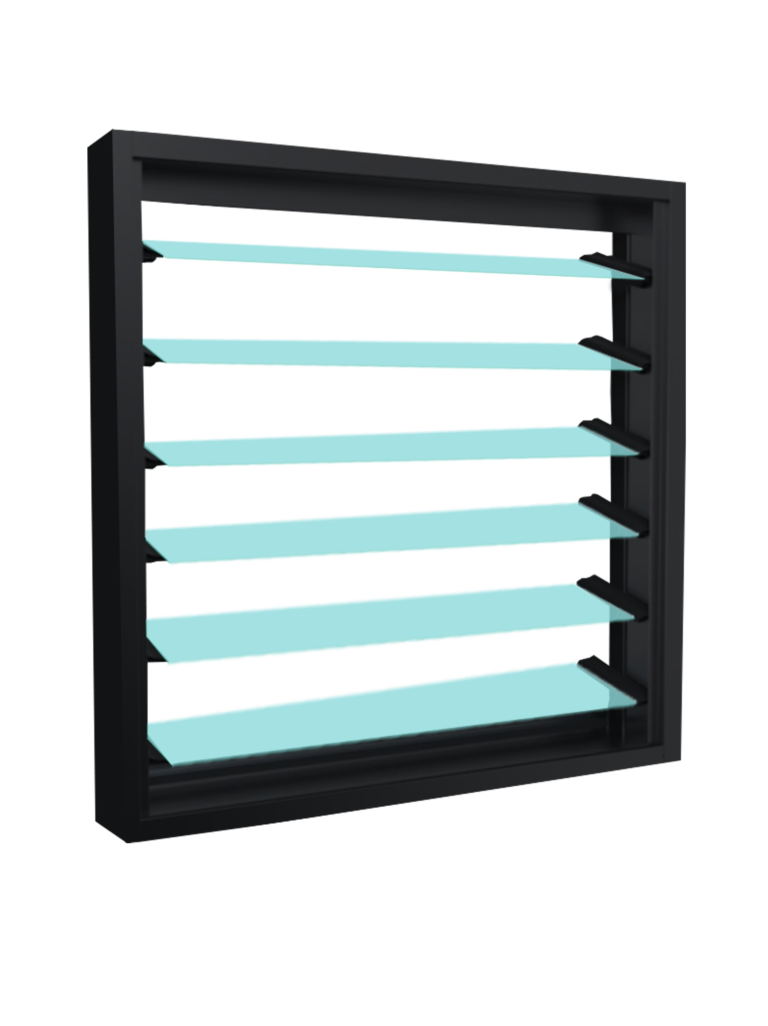
Christchurch Aluminium Louver Windows: Enhance Ventilation and Aesthetics
The durable aluminium frame ensures the louver windows can withstand Christchurch’s diverse climate. The material…
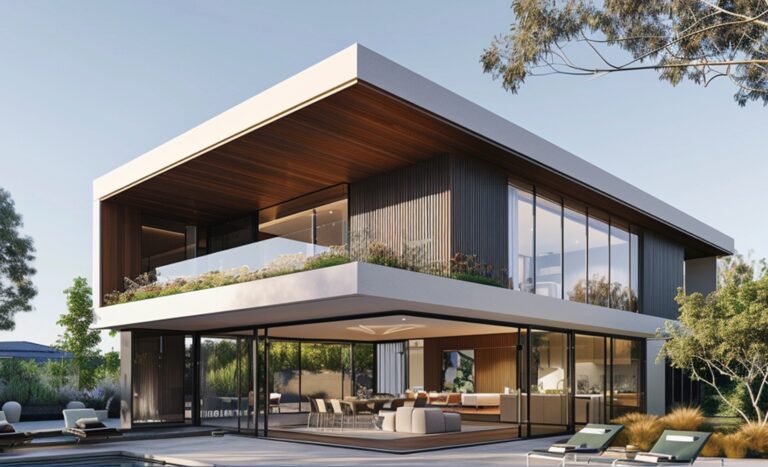
Common Building Structure Types in Australia and Their Corresponding Windows and Doors Pairings
There are four common building structures in Australia, and selecting the right type of windows…