Under AS1288, the required glass type depends on the location, application, impact risk and building design. Safety glazing such as toughened glass or laminated glass is required in areas where ordinary glass could create a risk of injury, including many doors, low-level windows and high-use areas.
Introduction
Glass plays an important role in modern Australian homes.
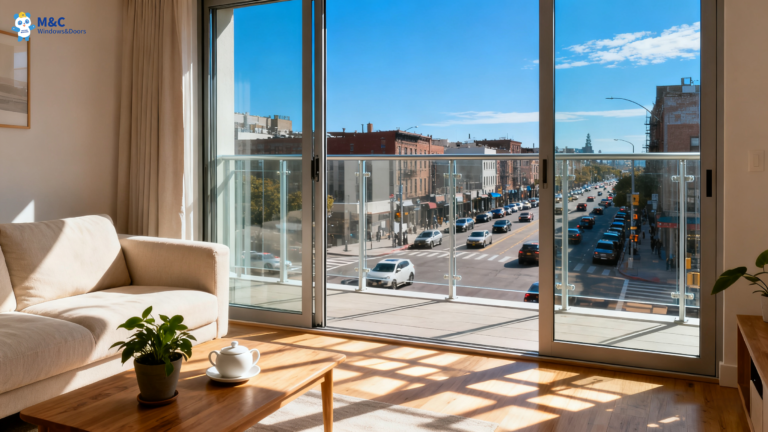
Large glass windows and doors provide:
- Natural light
- Better views
- Indoor-outdoor connection
- Modern architectural appearance
However, glass must also be selected correctly to ensure occupant safety.
In Australia, glass selection and installation are guided by AS1288 – Glass in Buildings: Selection and Installation.
Understanding AS1288 helps homeowners, builders and architects choose the correct glass solution for aluminium windows and doors.
What Is AS1288?
AS1288 is the Australian Standard that provides requirements for selecting and installing glass in buildings.
Unlike AS2047, which focuses on the performance of complete window and door systems, AS1288 focuses specifically on:
- Glass selection
- Safety glazing
- Glass thickness
- Installation methods
The purpose of AS1288 is to reduce the risk of injury caused by unsuitable glass applications.
Why Does Glass Selection Matter?
Not all glass performs the same way.
Different glass types provide different levels of:
- Safety
- Strength
- Thermal performance
- Acoustic control
- Impact resistance
Choosing the wrong glass type can create safety risks and may affect building compliance.
What Types of Glass Are Commonly Used Under AS1288?
The most common safety glass options used in Australian aluminium windows and doors include:
1. Toughened Safety Glass
Toughened glass is one of the most widely used safety glass types in Australia.
It is manufactured through a heat treatment process that increases its strength.
When broken, it breaks into small pieces rather than large sharp shards.
Common applications:
- Sliding doors
- Aluminium doors
- Large fixed windows
- Areas with higher impact risk
Advantages:
✔ Stronger than standard annealed glass
✔ Safer break pattern
✔ Suitable for large glass panels
2. Laminated Safety Glass
Laminated glass consists of two glass layers bonded together with an interlayer.
If broken, the glass fragments remain attached to the interlayer.
Common applications:
- Entry doors
- Security-sensitive areas
- Noise reduction applications
- Large architectural glazing
Advantages:
✔ Improved safety
✔ Better acoustic performance
✔ Glass remains held together after breakage
3. Double Glazed Safety Glass
Double glazing uses two glass panels separated by an insulating cavity.
It is often selected for:
- Energy efficiency
- Temperature control
- Acoustic performance
Double glazed units can incorporate:
- Toughened glass
- Laminated glass
- Low-E coatings
depending on project requirements.
When Does AS1288 Require Safety Glass?
Safety glass is commonly required in areas where people may accidentally impact the glass.
Examples include:
Glass Doors
Doors are one of the highest-risk areas because users interact directly with them.
Examples:
- Sliding doors
- Hinged doors
- Bifold doors
Low-Level Glazing
Windows close to floor level may require safety glazing.
Areas Near Walkways
Glass located beside paths or movement areas may require additional safety consideration.
Wet Areas
Examples:
- Bathrooms
- Shower areas
AS1288 Glass Selection Factors
The correct glass choice depends on several factors.
1. Location
Where is the glass installed?
Examples:
- Door
- Window
- Internal partition
- Bathroom
2. Height Above Floor Level
Lower glass panels generally have higher impact risk.
3. Glass Size
Large glass panels require careful consideration of:
- Thickness
- Strength
- Structural requirements
4. Building Environment
Factors include:
- Coastal exposure
- Wind conditions
- Temperature variation
AS1288 and Aluminium Windows
Modern aluminium windows often use larger glass areas.
Popular applications include:
- Floor-to-ceiling windows
- Slim frame windows
- Aluminium sliding doors
- Bifold doors
Because of these larger openings, correct glass selection becomes increasingly important.
A complete aluminium window solution should consider:
- Aluminium frame performance
- Glass specification
- Hardware
- Installation method
Common Mistakes When Choosing Window Glass
Choosing Glass Only Based on Price
The cheapest option may not always meet safety or performance requirements.
Assuming All Glass Is Safety Glass
Different glass types have different applications.
Ignoring Project Location
Coastal and high-wind areas may require different specifications.
Selecting Glass Without Considering Window Design
Glass performance depends on the complete system.
How MEICHEN Windows & Doors Approaches Glass Selection
MEICHEN Windows & Doors provides aluminium window and door solutions designed for Australian residential and architectural projects.
Our approach considers:
- Australian project requirements
- Window system design
- Glass specification
- Performance expectations
For each project, selecting the appropriate glass type is an important part of achieving safety, comfort and long-term performance.
Frequently Asked Questions
What glass is required under AS1288?
The required glass depends on location, application and safety risk. Safety glass such as toughened or laminated glass is commonly required in higher-risk areas.
Is toughened glass required for aluminium doors?
Many aluminium doors use toughened safety glass because doors are considered higher-risk glazing locations.
Does AS1288 require double glazing?
No. AS1288 focuses on safety and installation requirements, not whether a window must be single or double glazed.
Is laminated glass safer than toughened glass?
Both are safety glass types with different advantages. Laminated glass remains bonded after breaking, while toughened glass breaks into smaller fragments.
Does AS1288 apply to residential homes?
Yes. AS1288 applies to many residential glazing applications.
Related Articles
AS 4055 Wind Loads for Residential Aluminium Windows Explained
Quick Answer AS 4055 provides wind load classifications for residential buildings in Australia. It helps…
Why AS2047-Certified Factory-Direct Manufacturers Deliver Superior Structural Strength and Weather Resistance
In Australia, windows and doors are not merely decorative components—they are essential structural elements responsible…
Best Places to Install Awning Windows in Australian Homes
Awning windows are suitable for many areas of Australian homes because they provide excellent ventilation,…