What Is the Standard Thickness of Window Glass in Australia?
admin
Author
2026-06-30
Published
3 min read
Reading time
One of the most common questions from homeowners, builders, and developers is:
What is the standard thickness of window glass in Australia?
The answer is that there is no single standard glass thickness for every window. The appropriate thickness depends on factors such as the window size, wind load, building location, glazing type, and whether safety glass is required.
In Australia, glass thickness is primarily determined by AS1288 – Glass in Buildings – Selection and Installation, together with the National Construction Code (NCC). These requirements ensure that glazing is safe, structurally adequate, and suitable for its intended application.
Although there is no universal thickness, the most commonly used glass thicknesses for residential and commercial windows include:
| Glass Type | Common Thickness |
|---|---|
| Annealed (Float) Glass | 3mm, 4mm, 5mm, 6mm |
| Toughened Safety Glass | 4mm, 5mm, 6mm, 8mm, 10mm, 12mm |
| Laminated Safety Glass | 6.38mm, 8.38mm, 10.38mm, 12.38mm |
| Double Glazed Units (IGUs) | 20mm–32mm overall thickness (depending on glass and spacer configuration) |
These are the most frequently specified thicknesses, but larger windows and higher wind-load areas often require thicker glazing.
AS1288 does not require every window to use the same glass thickness. Instead, it considers several engineering factors, including:
- Window width and height
- Glass panel area
- Building height
- Wind classification
- Location within Australia
- Type of glass (annealed, toughened, laminated)
- Human impact requirements
- Support method (fully framed or partially framed)
For example, a small bathroom window may only require 4mm or 5mm glass, while a large floor-to-ceiling window may require 10mm or 12mm toughened or laminated safety glass.
For many Australian homes, the following thicknesses are commonly used:
4mm Glass
Suitable for:
- Small bedroom windows
- Laundry windows
- Small fixed windows
5mm Glass
Commonly used for:
- Medium-sized awning windows
- Casement windows
- Sliding windows
6mm Glass
Frequently specified for:
- Large residential windows
- Sliding doors
- Fixed picture windows
- Areas requiring improved strength
Many premium aluminium window systems now use 6mm glass as a minimum specification because it provides better durability, reduced deflection, and improved acoustic performance.
Where AS1288 requires safety glazing, the glass is typically thicker than standard float glass.
Common examples include:
| Safety Glass Type | Typical Thickness |
|---|---|
| Toughened Glass | 4mm–12mm |
| Laminated Glass | 6.38mm–12.38mm |
Typical applications include:
- Entry doors
- Sliding doors
- Low-level windows
- Bathroom glazing
- Stairway glazing
- Large floor-to-ceiling windows
For some applications, such as framed shower screens, 4mm toughened glass may be permitted, while partly framed or frameless shower screens generally require at least 6mm toughened glass.
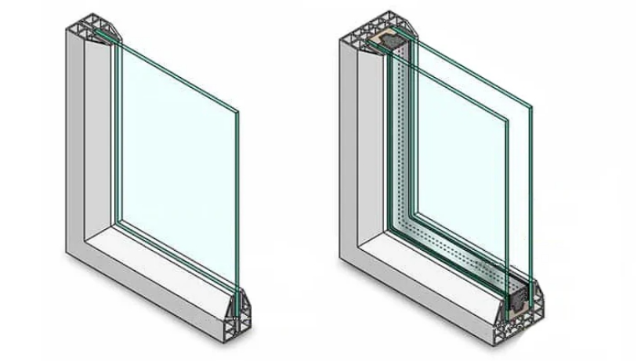
Double glazed units (IGUs) consist of two panes of glass separated by an air or argon-filled spacer.
Common configurations include:
- 4mm + 12A + 4mm (20mm IGU)
- 5mm + 12A + 5mm (22mm IGU)
- 6mm + 12A + 6mm (24mm IGU)
- 6mm + 16A + 6mm (28mm IGU)
The total thickness depends on:
- Glass thickness
- Spacer width
- Thermal performance requirements
- Acoustic performance requirements
Larger spacers and thicker glass generally provide better insulation and noise reduction.
Yes.
As glass panels become larger, thicker glass is generally required to resist:
- Wind pressure
- Glass deflection
- Structural loads
- Human impact
For example:
| Window Size | Typical Glass Selection* |
|---|---|
| Small Window | 4mm–5mm |
| Medium Window | 5mm–6mm |
| Large Fixed Window | 6mm–10mm |
| Floor-to-Ceiling Window | 8mm–12mm Safety Glass |
*Actual requirements vary depending on engineering calculations and AS1288.
Not necessarily.
Using thicker glass than required may:
- Increase project costs
- Add unnecessary weight
- Require stronger hardware
- Affect window operation
Conversely, glass that is too thin may not satisfy structural or safety requirements. The correct thickness should always be selected based on AS1288 and the specific project conditions.
At MEICHEN Windows & Doors, every aluminium window and door is custom manufactured to suit the project’s glazing requirements.
Depending on your application, we can provide:
- Standard float glass
- Toughened safety glass
- Laminated safety glass
- Low-E glass
- Double glazed units
- Acoustic glazing
- Energy-efficient glazing
Each glazing solution is selected according to the project’s size, wind classification, safety requirements, and performance objectives.
What is the most common window glass thickness in Australia?
For residential projects, 4mm, 5mm, and 6mm are the most common single-pane glass thicknesses, while larger openings often require thicker safety glass.
Is 4mm glass strong enough?
Yes, for many small windows. However, larger windows and impact-prone locations often require thicker or safety glazing.
What thickness is double glazing?
Most residential double glazed units have an overall thickness of 20mm to 28mm, although thicker units are available for improved thermal and acoustic performance.
Does AS1288 specify one standard thickness?
No. AS1288 determines the required glass thickness based on factors such as panel size, wind load, support conditions, and safety requirements rather than prescribing a single standard thickness.
Conclusion
There is no single standard window glass thickness in Australia. Instead, the appropriate thickness is determined by AS1288, taking into account the size of the glazing, wind loads, building location, and safety requirements.
For most residential applications:
- 4mm–6mm glass is commonly used for standard windows.
- 4mm–12mm toughened glass is typical for safety glazing.
- 6.38mm–12.38mm laminated glass is widely used where enhanced safety or security is required.
- 20mm–28mm overall thickness is common for double glazed units.
Selecting the correct glass thickness ensures your aluminium windows and doors provide long-term safety, durability, energy efficiency, and compliance with Australian Standards.
Related Articles
Why Double Glazing is the New Standard for Australian Homes: A Deep Dive into Science and Long-Term Value
In Australia, where we face everything from Sydney’s humid summers to Canberra’s freezing winter nights,…
BIM and Digital Fabrication in Australian Window Manufacturing: Parametric Modelling, IFC Exchange and CNC Precision for Custom Architectural Openings
Building Information Modelling (BIM) has evolved from an architectural design tool into a fabrication-defining workflow…
Canberra Luxury Villas: Which Chinese Source Factories Can Directly Supply AS2047 Certified Windows and Doors?
In Canberra’s luxury villa market, developers demand high-performance windows and doors that combine aesthetic appeal…