Bifold Doors vs Sliding Doors Australia: Which Is Better for Your Home or Development?
admin
Author
2026-06-24
Published
5 min read
Reading time
For Australian homes, few design decisions have as much visual and functional impact as the choice between bifold doors and sliding doors.
Both are popular in contemporary residential design. Both can connect indoor living areas to patios, pools, courtyards, and outdoor entertaining zones. And both can add natural light, improve lifestyle flow, and enhance the overall value of a project.
But while bifold and sliding doors are often discussed together, they solve very different design problems.
If you are planning a new build, renovation, duplex, townhouse, or apartment development, the right question is not “which door looks better?” It is:
Which door system works better for this opening, this lifestyle, this budget, and this building design?
This guide compares aluminium bifold doors and sliding doors in Australia, including layout, aesthetics, weather performance, usability, and where each option performs best.
What Is the Difference Between a Bifold Door and a Sliding Door?
Bifold doors
Bifold doors consist of multiple panels that fold and stack to one or both sides when opened. Their biggest advantage is that they can open up a large proportion of the doorway, creating a broad connection between indoors and outdoors.
Sliding doors
Sliding doors move horizontally along a track, with one panel sliding behind another. They are especially popular in modern homes because they allow large glazed panels, slimmer sightlines, and easy day-to-day operation.
Both systems can be made in aluminium and both can be customised for Australian residential and commercial applications. The right choice depends on how the space will be used.
When Sliding Doors Are Usually the Better Choice
In many modern Australian homes, sliding doors have become the default choice—especially for rear living spaces, view-facing openings, and homes with a more contemporary architectural style.
1. Better for large glass and slimline design
Sliding doors typically allow larger uninterrupted glass panels than bifold doors. This makes them ideal for:
- view-facing homes
- coastal properties
- architect-designed residences
- living rooms that prioritise light and outlook
If the goal is to create a cleaner, more minimal façade with less visible frame interruption, sliding doors usually have the advantage.
2. Easier day-to-day use
A sliding door is simple to use. You can open it partially or fully without needing to fold multiple panels or clear a stacking zone. This is useful for:
- busy family homes
- frequent access to patios or alfresco areas
- homes where the door is used many times per day
3. Better for tighter spaces
Because the panels slide rather than fold, sliding doors do not require internal or external swing space for stacked panels. This can make them easier to integrate into furniture layouts, balconies, or more compact openings.
4. Often a better fit for contemporary architecture
Many luxury homes and modern townhouse developments favour slimline sliding doors because they align well with minimalist aluminium framing and larger glazed openings.
When Bifold Doors May Be the Better Choice
Bifold doors still offer major advantages in the right project.
1. You want the widest possible opening
If the main goal is to open up the room as much as possible—such as connecting a living room directly to a deck or entertaining area—bifold doors can create a wider open span than many standard sliding door systems.
2. You want a dramatic entertaining effect
Bifold doors can create a strong “open wall” feeling when fully folded back. This makes them popular in:
- alfresco entertaining spaces
- café and hospitality-style residential designs
- renovation projects where the opening itself is intended as a statement feature
3. The opening is not primarily about view framing
Because bifold doors use more vertical frame divisions than large sliding doors, they may not be the best choice where uninterrupted glass views are the top priority. But if the project values opening width over clean sightlines, they can be a very strong option.
Bifold Doors vs Sliding Doors: The Main Factors to Compare
1. Opening Width
Bifold doors: usually better if your priority is opening up most of the wall.
Sliding doors: better if you want a large opening but do not need the full width completely clear.
2. Sightlines and Glass Area
Sliding doors: generally better for larger individual glass panels and slimmer visual lines.
Bifold doors: more panel joins and frame interruptions.
3. Everyday Convenience
Sliding doors: usually simpler and faster for frequent use.
Bifold doors: excellent when fully opened, but less convenient if you are only opening one section repeatedly throughout the day.
4. Space Planning
Sliding doors: more compact in operation because the panels remain within the track line.
Bifold doors: require stacking space to one or both sides when open.
5. Architectural Style
Sliding doors: often suit modern, minimalist, luxury, and coastal homes.
Bifold doors: often suit entertaining-focused homes, transitional designs, and projects where full-width opening is a major design goal.
6. Weather Performance and System Quality
In Australia, the door style alone does not determine performance. The actual result depends on the quality of the aluminium door system, including:
- seals
- sill design
- drainage
- hardware
- glazing
- compliance with Australian performance expectations
Whether you choose a bifold or sliding door, the system should be selected as a tested and project-appropriate external glazed door solution.
Which Is Better for Different Australian Projects?
Luxury coastal home
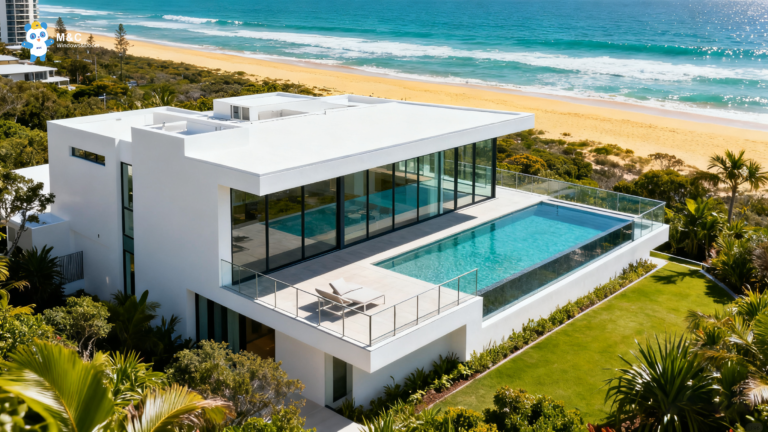
Sliding doors are often the stronger option if the home prioritises views, slim sightlines, and large glazed living areas.
Family home with an alfresco entertaining zone
Either can work, but bifold doors may be attractive if the goal is to fully open the rear living area during gatherings.
Townhouse or duplex
Sliding doors are often more practical due to easier daily operation and more compact panel behaviour.
Apartment balcony access
Sliding doors are usually the more practical and common solution.
Hospitality-style entertaining home
Bifold doors may suit projects that want a dramatic indoor-outdoor opening effect.
The Most Important Question: How Will the Door Actually Be Used?
This is where many homeowners go wrong.
A bifold door may look exciting in a showroom, but if the family mostly uses the opening for quick everyday access, a sliding door may be much more practical.
Likewise, a sliding door may look sleek and modern, but if the whole point of the project is to open an entire wall during entertaining, bifold doors may deliver the better experience.
The right choice depends on:
- frequency of use
- desired opening width
- view priorities
- furniture layout
- entertaining style
- wind and weather exposure
- glazing performance goals
- budget
What to Ask a Supplier Before Choosing
For bifold doors
- How many panels can the system support?
- What stacking configuration is available?
- What sill and drainage options are offered?
- Is the system suitable for Australian external applications?
For sliding doors
- What is the maximum panel size?
- Are slimline options available?
- Can the system support Low-E or double glazing?
- What level of weather and structural performance is available?
For both
- Is the system custom-made to suit our opening?
- What compliance and glazing support do you provide?
- Do you supply only, or also install?
- Can you work from architectural drawings?
Conclusion
There is no universal winner between bifold doors and sliding doors in Australia. The better choice depends entirely on the project.
Choose sliding doors if you want:
- larger uninterrupted glass
- slimmer sightlines
- easier everyday operation
- a cleaner modern aesthetic
Choose bifold doors if you want:
- a wider fully open span
- stronger entertaining connection
- a more dramatic opening effect between inside and outside
The best outcome comes from selecting a system based on how the space will actually function—not just what looks good in a brochure.
FAQs About Bifold Doors vs Sliding Doors
Are sliding doors more popular than bifold doors in Australia?
In many modern homes, yes—especially in projects that prioritise slimline design, large glass panels, and everyday convenience.
Do bifold doors open wider than sliding doors?
In many cases, yes. Bifold doors can open a larger proportion of the full opening width.
Are sliding doors better for views?
Usually yes, because they often allow larger glass panels and fewer vertical interruptions.
Which is better for entertaining?
Bifold doors can be excellent for entertaining if the goal is to open the space as widely as possible. Sliding doors are also effective but typically do not clear as much of the opening.
Can both bifold and sliding doors be double glazed?
Yes. Many aluminium bifold and sliding door systems can be configured with double glazing, Low-E glass, and other performance-focused options.
Related Articles
Are Aluminium Awning Windows Energy Efficient? A Complete Guide for Australian Homes
Are Aluminium Awning Windows Energy Efficient? Quick Answer Yes. Aluminium awning windows can provide excellent…

Aluminium Fixed Window Sydney: Enhance Your Home’s Aesthetics with Aluminium Fixed Windows
Their simplicity makes aluminium fixed windows ideal for areas where you want to maximize natural…
M&C Structurally Reinforced Aluminium Windows & Doors for High-Rise Projects in Australia
Across Australia — from Sydney’s waterfront towers to Brisbane’s skyline apartments — high-rise developments are…